

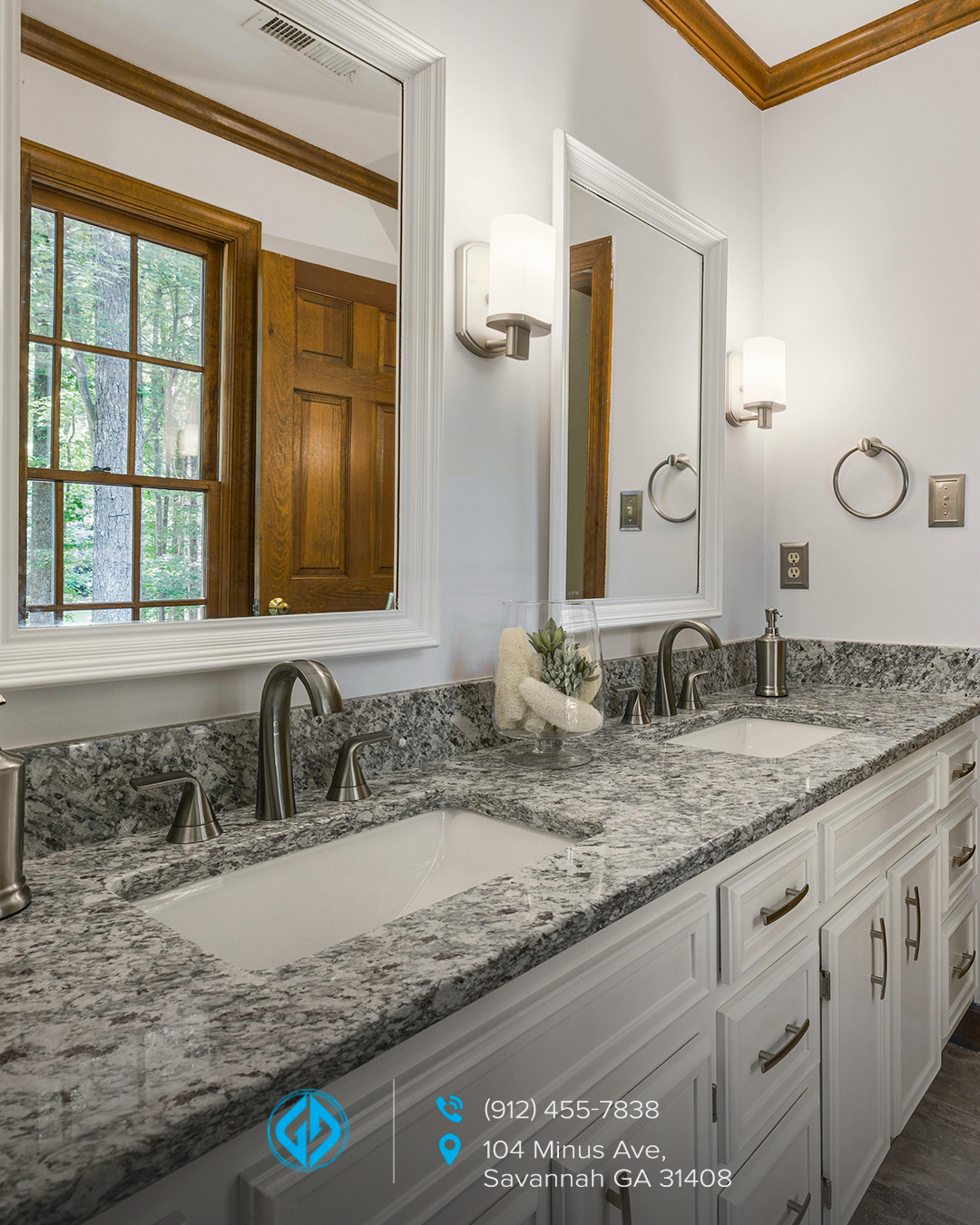
Quartz is usually the easier choice for a bathroom vanity because it is non-porous, requires very little maintenance, and handles everyday moisture well. Granite is also an excellent option, especially for homeowners who prefer the natural variation, unique patterns, and timeless appearance of natural stone.
When choosing bathroom countertops Hampton, SC, it is important to look beyond color and price. A bathroom vanity is exposed to water, cosmetics, toothpaste, soap, hair products, and daily cleaning, so the countertop should combine durability with a style that works with the rest of the bathroom.
At Granite Depot of Savannah, we help homeowners compare granite, quartz, marble, and other countertop materials and coordinate the fabrication and installation process. Although our showroom is located in Savannah, GA, we serve customers in Hampton, SC and surrounding communities.
Is quartz or granite better for a bathroom vanity?
Quartz is generally the more convenient option for a bathroom because it is non-porous and does not require routine sealing. Granite, however, can be the better choice for homeowners who prioritize natural stone character and unique slab patterns.
Both materials are strong enough for everyday bathroom use. The main difference is how much maintenance you want and what kind of appearance you prefer.
Quartz is manufactured using natural quartz minerals combined with resins and pigments. This allows manufacturers to create highly consistent colors and patterns, including designs inspired by marble.
Granite is quarried as a natural stone slab. Every slab has its own combination of mineral movement, veining, speckles, and color variation.
For homeowners comparing bathroom countertops Hampton, SC, the choice often comes down to these priorities:
- Low maintenance: Quartz
- Natural appearance: Granite
- Consistent color: Quartz
- Unique slab pattern: Granite
- Minimal sealing: Quartz
- Maximum natural variation: Granite
- Traditional luxury: Both
- Modern bathroom design: Both
Why is quartz a popular choice for bathroom vanities?
Quartz is popular because it combines a sophisticated appearance with easy everyday maintenance. Its non-porous surface makes it particularly practical for a bathroom, where water and personal-care products are regularly present.
Quartz does not normally require sealing. Regular cleaning with a soft cloth, mild soap, or a manufacturer-approved cleaner is generally sufficient for routine maintenance.
Popular quartz brands include:
- Cambria
- Caesarstone
- Silestone
- MSI Q Quartz
- Viatera
Many of these manufacturers offer marble-inspired designs such as Calacatta, Carrara, and Statuario styles. This gives homeowners the appearance of natural stone while maintaining the consistency associated with engineered quartz.
Quartz is also available in solid white, warm beige, gray, black, and many other colors. This makes it easy to coordinate a vanity with tile, cabinets, mirrors, lighting, and bathroom fixtures.
Why might granite be better for a bathroom vanity?
Granite can be the better choice when natural stone character is the priority. Because granite is quarried directly from the earth, every slab has a distinctive appearance that cannot be perfectly duplicated.
Popular granite varieties for bathrooms include:
| Granite Style | Appearance | Ideal Bathroom Style |
|---|---|---|
| Alaska White | White with gray and dark movement | Modern or transitional |
| Colonial White | Soft white with gray accents | Classic |
| Black Pearl | Dark gray and black | Contemporary |
| River White | White with gray and subtle burgundy | Transitional |
| Absolute Black | Deep, consistent black | Modern |
| Steel Gray | Medium-to-dark gray | Contemporary |
Granite is also highly durable and resistant to everyday wear. In a bathroom, it is rarely exposed to the same level of heat or heavy impact as a kitchen countertop, so granite can perform extremely well for many years.
The main consideration is maintenance. Granite is a natural stone with varying degrees of porosity, so the specific slab may require periodic sealing.
Does quartz require less maintenance than granite?
Yes, quartz generally requires less maintenance than granite. Quartz is non-porous, so homeowners do not normally need to schedule periodic sealing.
Granite maintenance is still straightforward, but the stone may require resealing depending on its porosity, finish, and use. A professional can recommend the appropriate maintenance schedule for the specific slab.
For either material, we recommend:
- Wiping up spills promptly
- Using a soft cloth or sponge
- Choosing a stone-safe cleaner
- Avoiding abrasive cleaning products
- Avoiding harsh chemicals
- Keeping standing water from accumulating around seams
- Following the material manufacturer’s care recommendations
Bathroom surfaces can encounter makeup, hair dye, skincare products, toothpaste, and other substances that may stain or damage an improperly maintained surface. Simple regular cleaning is the easiest way to preserve the countertop.
Which material is more resistant to water?
Quartz has the advantage because its engineered surface is non-porous. Water and everyday bathroom moisture are less likely to penetrate the material.
Granite can also work extremely well in bathrooms when properly sealed and maintained. A quality sealer helps reduce absorption and provides additional protection against moisture and stains.
This is particularly relevant when selecting bathroom countertops Hampton, SC for a heavily used family bathroom. Quartz can be attractive for homeowners who want to minimize maintenance, while granite can be a great fit for homeowners comfortable with periodic care.
Neither material should be treated as completely maintenance-free. Proper installation around sinks and faucets is equally important because water can reach areas beneath or behind the countertop if the installation is not properly finished.
Which countertop material is more durable?
Both granite and quartz are highly durable enough for everyday bathroom use. Granite has excellent hardness and resistance to scratches, while quartz also provides strong resistance to everyday wear.
The biggest practical difference is not usually durability but how each material responds to specific conditions.
| Feature | Granite | Quartz |
|---|---|---|
| Durability | Excellent | Excellent |
| Water resistance | Excellent when properly sealed | Excellent |
| Porosity | Varies by slab | Non-porous |
| Sealing | May be required | Not normally required |
| Scratch resistance | Excellent | Excellent |
| Heat resistance | Excellent | Good |
| Natural variation | Very high | Low to moderate |
| Maintenance | Low | Very low |
For a bathroom vanity, both options can provide decades of service when properly fabricated, installed, and maintained.
How much do granite and quartz bathroom countertops cost?
Granite and quartz bathroom countertops commonly fall within a similar overall price range, although the exact cost depends on the material, vanity size, slab selection, fabrication, edge profile, sink cutout, and installation.
Typical installed price ranges can be approximately:
- Standard granite: $50–$100 per square foot
- Premium granite: $80–$150+ per square foot
- Standard quartz: $60–$100 per square foot
- Premium quartz: $90–$150+ per square foot
For a typical bathroom vanity, the countertop itself may cost approximately $500–$2,000, while larger double-sink vanities and premium materials can reach $2,500 or more.
Additional costs may include:
- Sink cutouts
- Faucet holes
- Decorative edge profiles
- Backsplash pieces
- Demolition
- Delivery
- Installation
- Custom fabrication
The best way to compare prices is to request a complete quote that includes fabrication and installation rather than comparing only the price per square foot.
How long does it take to install a granite or quartz bathroom vanity?
A standard bathroom vanity countertop can often be completed within 1–2 weeks, depending on material availability, measurements, fabrication, and scheduling.
A typical project can follow this timeline:
| Project Stage | Typical Time |
|---|---|
| Material selection | 1–3 days |
| Measurement | 1 day |
| Template confirmation | 1–2 days |
| Fabrication | 5–10 business days |
| Installation | 1 day |
A straightforward vanity may be completed faster when the material is readily available. Custom edges, unusual vanity dimensions, specialty slabs, or multiple bathroom countertops can extend the schedule.
Which material looks more luxurious?
Both granite and quartz can create a luxurious bathroom. The better choice depends on whether you want natural variation or a more controlled design.
Granite creates a one-of-a-kind appearance because every slab is different. Dramatic granite with movement can become the focal point of a bathroom.
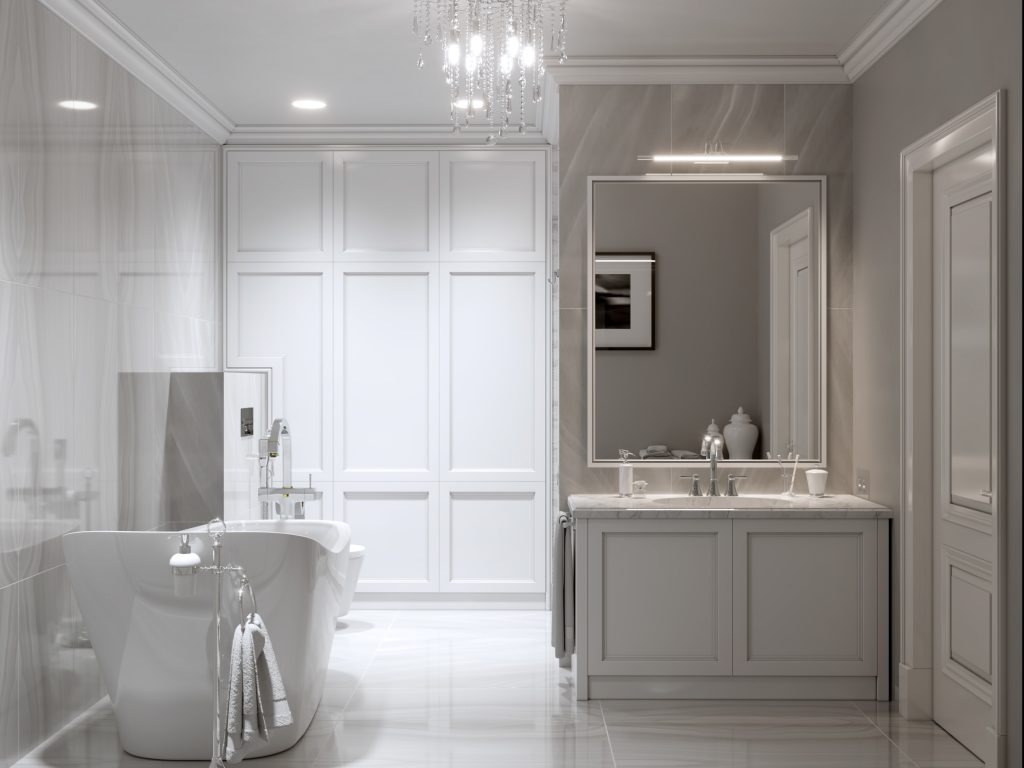
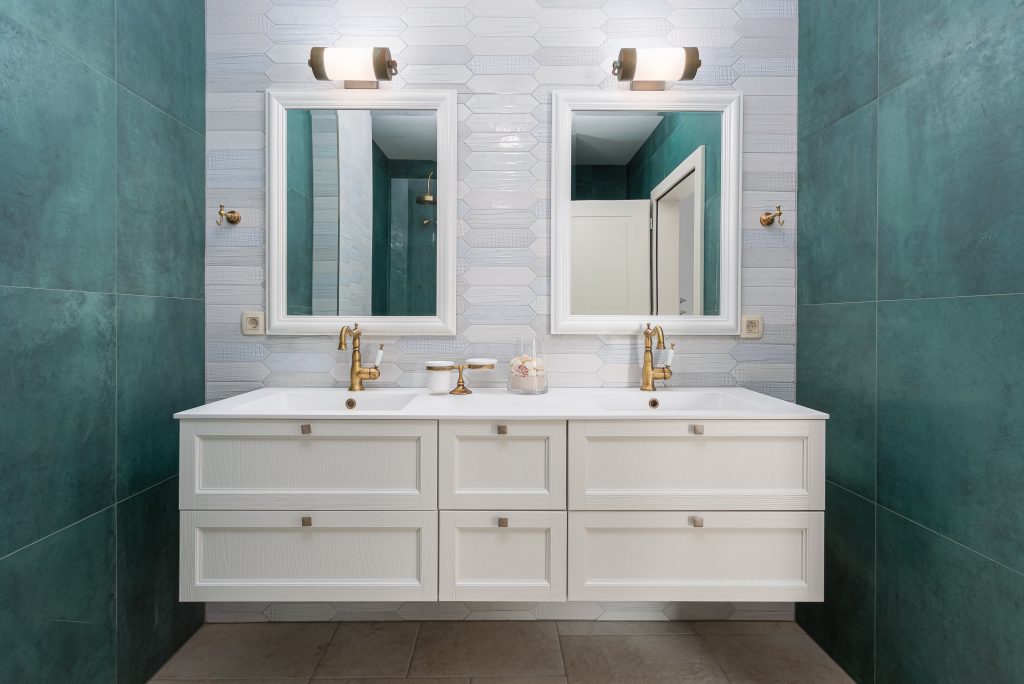
Quartz can create an equally upscale look, particularly with marble-inspired designs. White quartz with gray or gold veining can work beautifully with brushed brass fixtures, white cabinetry, large-format tile, and modern lighting.
For bathroom countertops Hampton, SC, consider the entire room before selecting the slab. A countertop should coordinate with the vanity cabinets, shower tile, flooring, wall color, mirrors, and hardware.
Is quartz or granite better for a modern bathroom?
Quartz often has an advantage in modern bathrooms because manufacturers offer consistent colors and minimalist patterns. A clean white quartz vanity can create a bright, contemporary appearance without competing with decorative tile or fixtures.
Granite can also work beautifully in modern bathrooms. A dark granite such as Absolute Black or a subtle gray variety can create strong contrast against white cabinetry.
For a modern design, consider:
- White quartz with subtle gray veining
- Matte black fixtures
- White or light-gray cabinets
- Large-format porcelain tile
- Minimalist mirrors
- Gray or black granite
- Simple eased countertop edges
The best choice depends on whether you want the countertop to blend into the room or become its main visual feature.
How should you choose between granite and quartz?
Choose quartz if low maintenance and consistent appearance are your highest priorities. Choose granite if you want the natural character and individuality of a genuine stone slab.
Before making a final decision, we recommend considering:
- Bathroom size
- Vanity dimensions
- Number of sinks
- Cabinet color
- Tile design
- Fixture finish
- Lighting
- Maintenance preferences
- Budget
- Desired countertop pattern
It is also helpful to view actual slabs or large samples. A small sample may not accurately represent the movement and color variation of a full natural granite slab.
At Granite Depot of Savannah, we help customers compare countertop materials, select slabs, and coordinate fabrication and installation for bathroom remodeling projects.
What should you know before ordering a bathroom countertop?
The most important step is to confirm the vanity dimensions, sink type, faucet placement, material, edge profile, and installation requirements before fabrication begins.
A professional countertop project generally includes:
- Material selection
- Measurements
- Template creation
- Sink cutout
- Faucet holes
- Edge finishing
- Fabrication
- Delivery
- Installation
The sink should be selected before fabrication whenever possible because the exact cutout dimensions can depend on the sink model and installation method.
FAQ: What are the most common questions about bathroom granite and quartz?
Is quartz or granite better for a bathroom vanity?
Quartz is generally easier to maintain because it is non-porous and does not normally require sealing. Granite is an excellent alternative for homeowners who prefer natural stone and unique slab patterns.
Does granite need to be sealed in a bathroom?
Some granite varieties benefit from periodic sealing. The exact schedule depends on the specific stone’s porosity and use.
Does quartz need to be sealed?
No. Engineered quartz is non-porous and does not normally require sealing.
Can quartz look like marble?
Yes. Many brands, including Cambria, Caesarstone, Silestone, and MSI, offer quartz designs inspired by natural marble.
How much does a bathroom quartz countertop cost?
A typical quartz vanity countertop can cost approximately $60–$100 per square foot installed, while premium options may cost $150 or more per square foot.
How long does a bathroom countertop last?
Both granite and quartz can last for decades with appropriate installation and care.
Can granite be used around a bathroom sink?
Yes. Granite is a popular material for bathroom vanities and can be fabricated with undermount, drop-in, and other sink configurations.
Can Granite Depot of Savannah help with bathroom countertops in Hampton, SC?
Yes. Granite Depot of Savannah is based in Savannah, GA and serves customers in Hampton, SC and surrounding areas with countertop selection, fabrication, measurements, and professional installation.
Where can you get quality granite and quartz for a bathroom vanity?
Quartz is often the most convenient choice for a bathroom because of its non-porous surface and minimal maintenance, while granite remains an excellent option for homeowners who value natural stone, unique patterns, and timeless character.
If you are comparing bathroom countertops Hampton, SC, the right choice ultimately depends on your bathroom design, budget, maintenance preferences, and the look you want to achieve.
Granite Depot of Savannah can help with material selection, countertop fabrication, measurements, and professional installation for bathroom vanity projects.
Granite Depot of Savannah
104 Minus Ave
Savannah, GA 31408
Phone: (912) 455-7838