

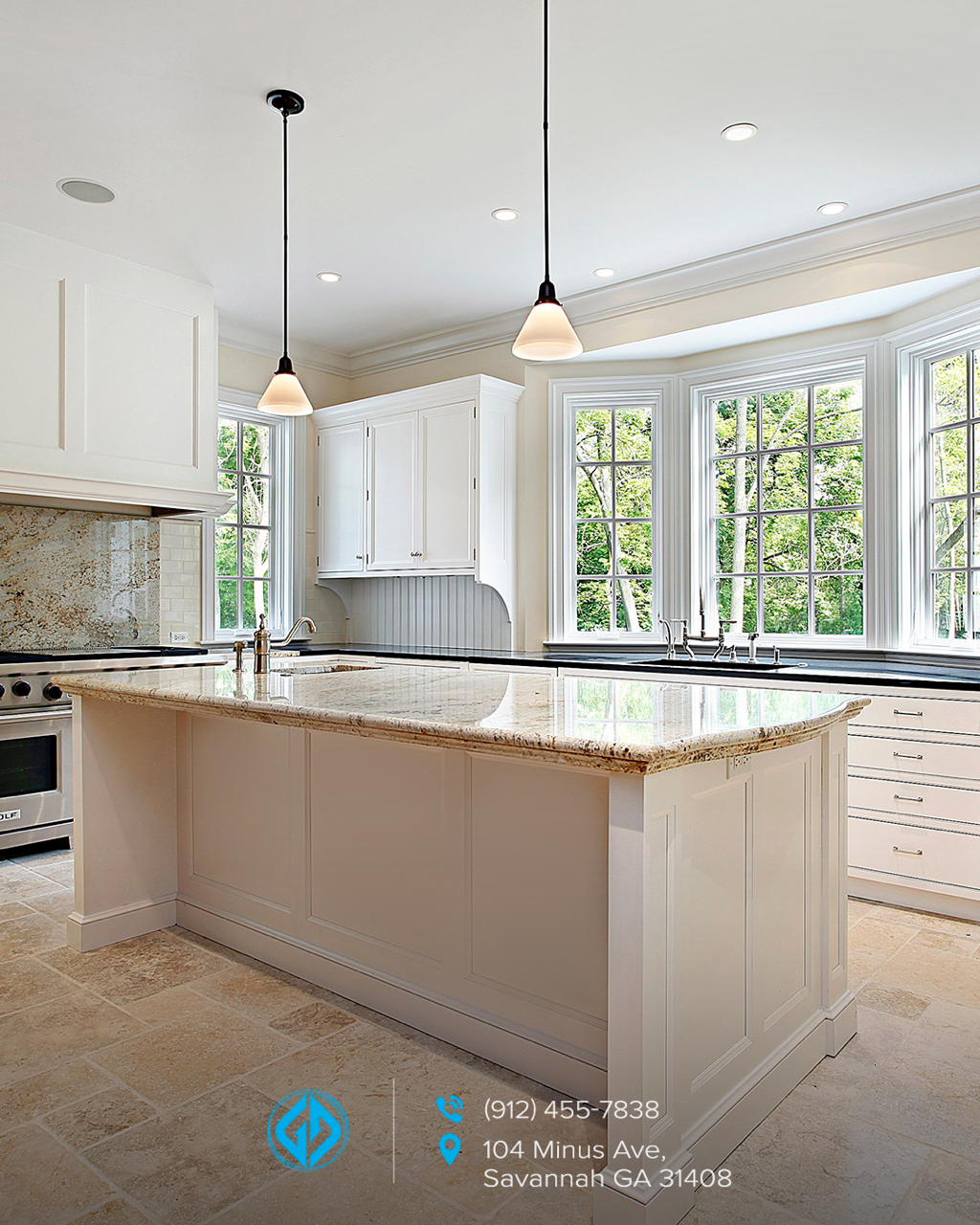
Granite countertops are known for their durability, natural beauty, and ability to withstand everyday kitchen use. However, even though granite is a strong natural stone, it is not completely maintenance-free. Because granite is porous to varying degrees, liquids can penetrate its surface if the stone is not properly sealed. Resealing helps reduce this risk, protects the appearance of the stone, and makes routine cleaning easier.
So, how often should you reseal granite countertops? Most granite countertops should be resealed approximately every 1–3 years, although the ideal schedule depends on the stone’s porosity, the type of sealer used, and how frequently the countertop is used. Some dense granite varieties may need sealing less often, while more porous stones may benefit from annual treatment.
For homeowners considering granite kitchen countertops Savannah, GA, understanding the sealing process is an important part of protecting a long-term investment. At Granite Depot of Savannah, we help homeowners select, fabricate, and install natural stone countertops while providing practical guidance on caring for their surfaces.
How Often Do Granite Countertops Need to Be Resealed?
Most granite surfaces benefit from resealing every one to three years. However, there is no universal schedule that works for every slab. Granite comes in many varieties, and each one has a different density and absorption rate.
For example, a dense black granite may resist moisture more effectively than a lighter, more porous variety. The quality and condition of the original sealer also affect how long the protective layer remains effective.
Here is a general maintenance guide:
| Granite countertop type | Suggested resealing frequency |
|---|---|
| Dense, low-porosity granite | Every 2–3 years or as needed |
| Medium-porosity granite | Approximately every 1–2 years |
| More porous granite | Every 6–12 months, depending on testing |
| Frequently used kitchen countertops | Check every 6–12 months |
| Lightly used countertops | Check annually and reseal when necessary |
These are general estimates rather than fixed rules. Always follow the sealer manufacturer’s instructions and consider the recommendations of your stone professional.
Why Do Granite Countertops Need to Be Sealed?
Granite is a natural stone formed under intense heat and pressure. Although it is relatively hard and durable, it can contain microscopic pores and natural fissures that allow liquids to enter its surface.
A penetrating sealer helps reduce absorption by filling or lining these tiny openings. It does not make granite completely waterproof, but it gives homeowners more time to wipe up spills before they penetrate the stone.
What does sealing help protect against?
- Oil stains: Cooking oils, butter, and greasy food residues can leave dark marks on porous granite.
- Water absorption: Water may temporarily darken certain granite surfaces if it penetrates the stone.
- Food stains: Coffee, tea, wine, sauces, and fruit juices can discolor unprotected or insufficiently sealed stone.
- Everyday kitchen spills: A protective sealer makes it easier to clean spills before they become permanent stains.
It is important to understand that sealing does not prevent scratches, chips, or heat damage. Granite still needs appropriate everyday care, including cutting boards, trivets, and gentle cleaning products.
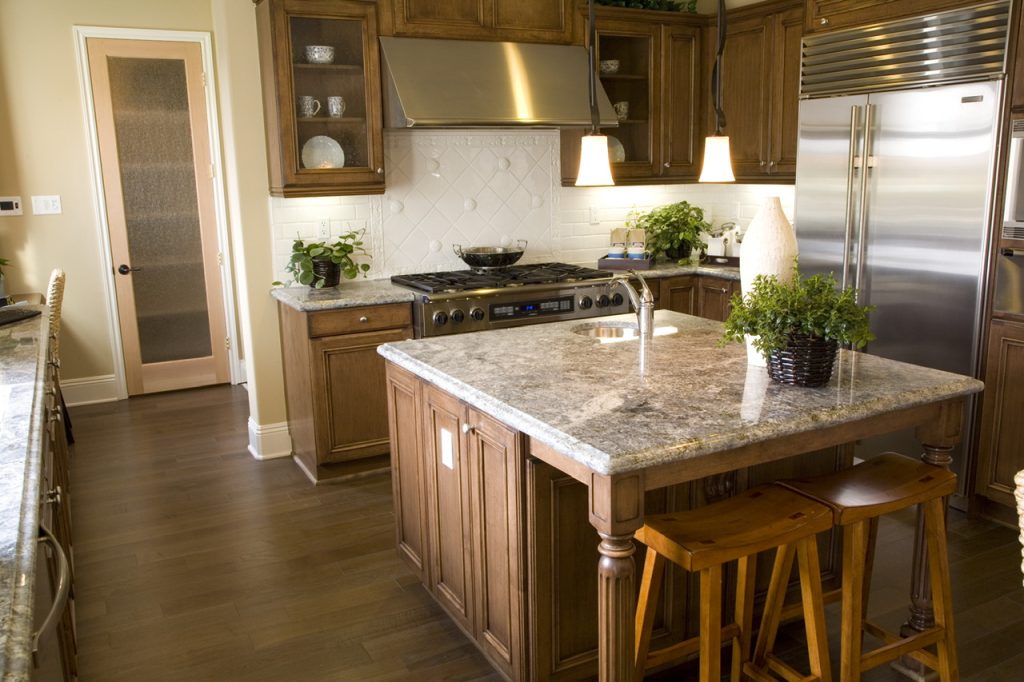
How Can You Tell When Granite Needs Resealing?
The easiest way to determine whether your granite needs resealing is to perform a simple water-drop test. This takes only a few minutes and can help you understand whether the existing sealer is still providing protection.
How Do You Perform the Water-Drop Test?
Follow these steps:
- Clean a small section of the countertop using a stone-safe cleaner.
- Allow the surface to dry completely.
- Place a few drops of clean water on an inconspicuous area.
- Leave the water in place for approximately 10–15 minutes.
- Wipe the water away and examine the granite.
Pay attention to the following signs:
- The water remains on the surface: The granite is likely still adequately sealed in that area.
- The stone becomes noticeably darker: Moisture may be penetrating the surface, suggesting that resealing is needed.
- The water disappears quickly: The stone may be absorbing moisture and could require additional protection.
This test is a useful screening method, but it is not a perfect measurement of sealer performance. Results can vary depending on the granite’s natural color, finish, and porosity. If you are unsure, consult a stone-care professional before applying another product.
What Type of Sealer Is Best for Granite Countertops?
For most residential granite countertops, a high-quality penetrating sealer is the preferred option. Unlike topical coatings, penetrating sealers are designed to enter the stone and provide protection without creating a thick film on the surface.
Several established products are commonly used for natural stone care:
| Sealer | Main characteristics | Typical use |
|---|---|---|
| StoneTech BulletProof Sealer | Penetrating protection for porous natural stone | Residential granite and other natural stone |
| Miracle Sealants 511 Impregnator | Impregnating sealer designed to resist moisture and stains | Granite, marble, and other porous surfaces |
| Aqua Mix Sealer’s Choice Gold | Water-based penetrating sealer | Natural stone and other compatible surfaces |
| Tenax Proseal | Professional-grade stone sealer | Natural stone fabrication and installation projects |
Always check the product label to confirm compatibility with your particular granite. Different stones may require different application methods, and some sealers can affect the appearance of certain finishes.
Before treating the entire countertop, test the product in a small, hidden area. This helps you check for unwanted changes in color, sheen, or texture.
How Much Does It Cost to Reseal Granite Countertops?
Resealing is generally an affordable maintenance task compared with replacing or repairing a damaged countertop. The final price depends on the countertop’s total square footage, its condition, the product selected, and whether you hire a professional.
Here are approximate U.S. cost ranges:
| Service or product | Estimated cost |
|---|---|
| DIY granite sealer | $20–$60 per bottle |
| Stone-safe cleaning product | $10–$30 |
| Professional resealing | $1–$3 per sq. ft. |
| Professional minimum service charge | $100–$250 |
| Professional cleaning and resealing | $200–$500+ |
For a typical kitchen with approximately 40–60 square feet of granite, a straightforward professional resealing service might cost around $100–$250, depending on the contractor’s minimum charge and local pricing. Deep cleaning, stain removal, repairs, or additional preparation can increase the total.
These figures are general estimates, not a service quote from Granite Depot of Savannah. Ask the contractor what is included before scheduling work, especially whether cleaning and old residue removal are part of the price.
How Long Does Granite Resealing Take?
The actual application process is usually relatively quick. For an average kitchen, applying a penetrating sealer may take approximately 30–90 minutes, depending on the countertop’s size, condition, and the product’s instructions.
However, the full process can take longer because the surface must be properly prepared and allowed to cure.
A typical maintenance schedule may look like this:
| Stage | Approximate time |
|---|---|
| Cleaning and preparation | 15–30 minutes |
| Drying before application | Several hours, depending on conditions |
| Sealer application | 30–90 minutes |
| Product absorption and wiping | 10–30 minutes |
| Curing or waiting period | Often 24–72 hours, depending on the product |
Always follow the manufacturer’s instructions for drying, curing, and returning the countertop to normal use. Some products allow light use sooner, while others require a longer waiting period.
What Should You Avoid After Resealing Granite?
Even properly sealed granite needs gentle maintenance. Certain household cleaners and habits can damage the stone’s finish or interfere with the protective treatment.
Avoid these common mistakes:
- Using vinegar or lemon juice: Acidic cleaners can damage some natural stone surfaces, particularly if the stone contains acid-sensitive minerals.
- Applying bleach or harsh chemicals: Strong cleaning products may affect the finish or leave residues.
- Using abrasive scouring pads: Rough materials can dull polished granite over time.
- Leaving spills overnight: Sealing provides extra time to clean up liquids, but it does not make the countertop stain-proof.
- Placing hot cookware directly on the surface: Sudden temperature changes can contribute to thermal stress or damage.
- Using generic waxes or topical coatings: These products may leave buildup or create an unwanted appearance if they are not designed for granite.
For everyday cleaning, use warm water, a soft microfiber cloth, and a pH-neutral stone cleaner. Products specifically formulated for natural stone are a safer choice than general-purpose acidic household cleaners.
Does Every Granite Color Need the Same Amount of Sealing?
No. Granite color can sometimes provide a general indication of density, but appearance alone cannot determine how frequently a countertop needs resealing.
Some darker granite varieties, including certain black stones, are relatively dense and may absorb less moisture. Some lighter-colored granites can be more porous and may require more frequent attention. However, there are exceptions in both categories.
The best approach is to evaluate the individual slab rather than rely on color alone.
When choosing granite kitchen countertops Savannah, GA, consider asking about:
- The specific granite variety and its porosity.
- Whether the slab has already been treated with a sealer.
- Which sealer is compatible with the stone.
- Recommended maintenance intervals.
- Whether the selected finish requires any special care.
A polished granite surface may be easier to clean than a textured finish, but both can benefit from appropriate sealing when the stone’s porosity calls for it.
How Can You Keep Granite Countertops in Good Condition Between Sealing Treatments?
Consistent everyday care is just as important as resealing. A simple cleaning routine helps preserve the stone’s natural appearance and reduces the chance of staining.
Here are practical habits to follow:
- Wipe spills promptly. Pay particular attention to coffee, wine, cooking oil, tomato sauce, and citrus juice.
- Clean the surface daily. Use a microfiber cloth and a pH-neutral cleaner formulated for natural stone.
- Use cutting boards. Granite is scratch-resistant, but cutting directly on the surface is not recommended.
- Use trivets and heat pads. Avoid placing hot pots and pans directly on the countertop.
- Dry areas around the sink. This helps prevent prolonged moisture exposure and water spots.
- Check the sealer periodically. Perform the water-drop test every six to twelve months, especially in high-use areas.
These small habits can help extend the life of the protective treatment and keep your countertop looking beautiful for years.

Frequently Asked Questions About Granite Countertop Resealing
Can You Reseal Granite Too Often?
Yes. Applying sealer more frequently than necessary can lead to residue, streaks, or a hazy appearance, particularly if excess product is not removed correctly. Test the surface first and follow the manufacturer’s recommendations rather than automatically resealing every year.
Does New Granite Need to Be Sealed Immediately?
Not necessarily. Some granite slabs are sealed during fabrication or before installation, while others may not require additional treatment right away. Ask whether the countertop has already been sealed and follow the recommended care instructions.
Can You Use Granite Countertops Without Sealing Them?
Some dense granite varieties have very low absorption rates and may not require regular sealing. However, more porous varieties benefit from a suitable penetrating sealer. The water-drop test can help you assess the surface.
Does Sealing Granite Change Its Color?
Most quality penetrating sealers are designed to protect granite without noticeably changing its natural appearance. However, enhancing sealers can deepen the stone’s color. Always test a product in an inconspicuous area before applying it to the entire countertop.
How Long Does Granite Sealer Last?
Depending on the stone, product, and amount of daily use, a sealer may last anywhere from several months to a few years. Follow the manufacturer’s instructions and check the countertop periodically.
Is Professional Granite Resealing Better Than DIY?
Both options can work well. DIY resealing is often suitable for homeowners who follow the product instructions carefully. Professional service may be preferable if the countertop has stubborn stains, uneven protection, or an unknown previous treatment.
Does Sealing Prevent All Granite Stains?
No. Sealing reduces the rate at which liquids enter the stone, but it does not make granite completely stain-proof. Wiping spills promptly remains essential.
Where Can You Get Help With Granite Countertops in Savannah?
Granite countertops can provide years of beauty and functionality when they are selected, installed, and maintained properly. Resealing every one to three years is a useful general guideline, but the right schedule depends on the individual stone. Regular water-drop testing, appropriate cleaning products, and prompt spill removal will help you protect your investment.
At Granite Depot of Savannah, we help homeowners choose natural stone surfaces and provide countertop fabrication and installation services. Whether you are planning a kitchen update or selecting granite kitchen countertops Savannah, GA, our team can help you explore available granite options and understand the care your chosen surface may need.
Granite Depot of Savannah
Address: 104 Minus Ave, Savannah, GA 31408
Phone: (912) 455-7838