

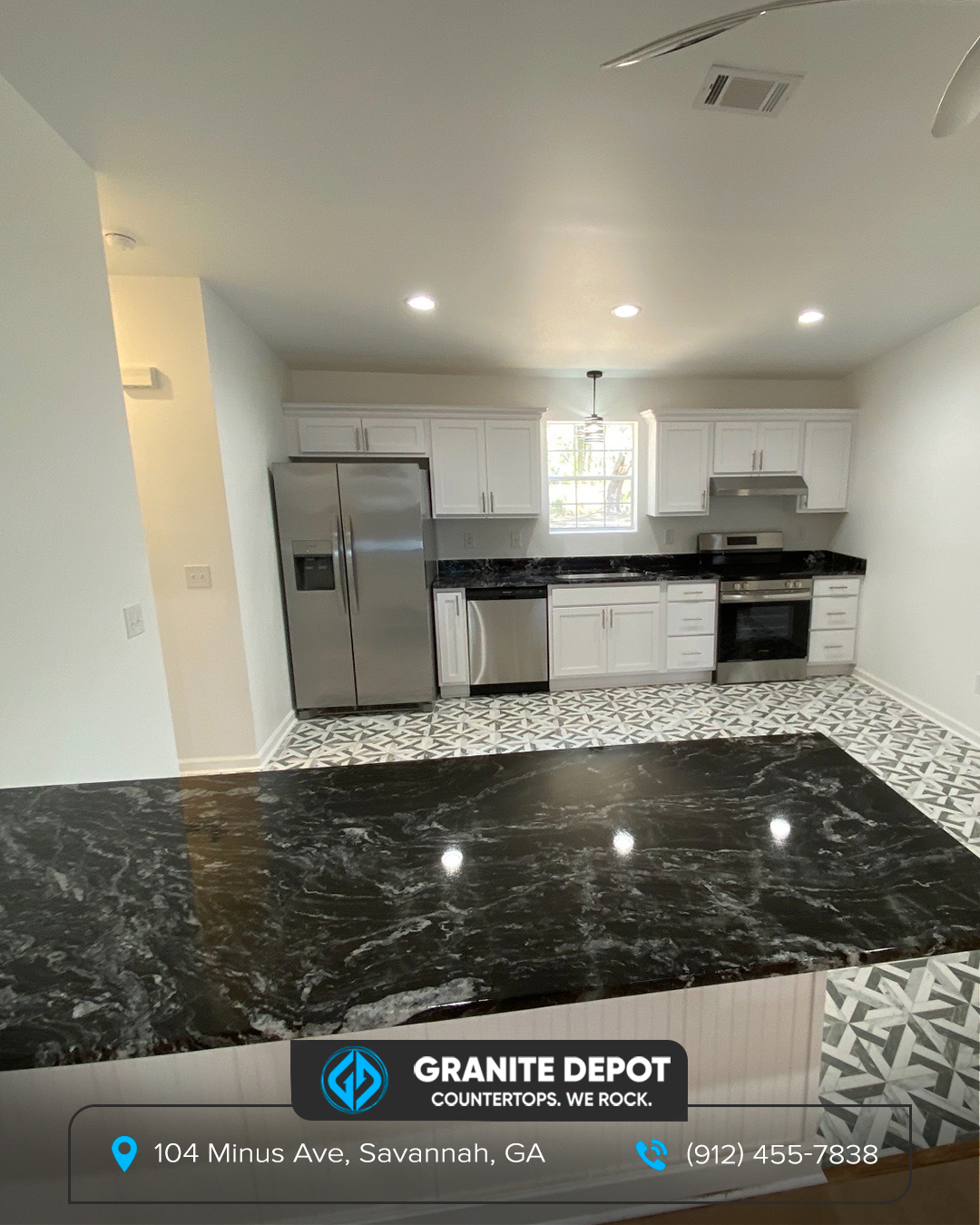
When planning a kitchen renovation, choosing the right granite countertop is an important decision. While homeowners often focus on color, pattern, and finish, the thickness of the granite slab is just as crucial. The thickness of your countertops impacts not only the durability and strength of the surface but also the overall aesthetic and cost.
If you’re considering granite kitchen countertops Hilton Head Island, SC, understanding the different thickness options will help you make the best choice for your home. At Granite Depot of Savannah, we provide high-quality granite countertops in a range of thicknesses to suit different kitchen styles and functional needs. In this guide, we’ll explore the most common granite thicknesses, their benefits, and how to decide which one is right for your kitchen.
Why Does Granite Thickness Matter?
Granite is a durable and long-lasting material, but its thickness plays a key role in determining its overall strength and functionality. A thicker slab offers more structural stability, while a thinner slab may require additional support. Here are some key reasons why choosing the right thickness is important:
- Durability – Thicker slabs are more resistant to cracking and chipping.
- Aesthetic Appeal – The thickness of your countertop can affect the overall design and visual impact of your kitchen.
- Structural Integrity – Thinner slabs may need plywood or additional reinforcement to ensure stability.
- Cost Considerations – Thicker slabs are more expensive, but they provide greater longevity and fewer installation complications.
Now, let’s explore the different granite thickness options available for granite kitchen countertops Hilton Head Island, SC.
Standard Granite Thickness Options for Kitchen Countertops
Granite countertops typically come in three standard thicknesses: 2 cm (¾ inch), 3 cm (1 ¼ inches), and 1 ¼ inch with laminated edges. Each has its own advantages and is suited for different applications.
1. 2 cm (¾ inch) Granite Countertops
This is the thinnest option available for granite countertops and is commonly used in prefabricated countertop designs. While 2 cm granite is lighter and more affordable, it requires additional reinforcement to prevent breakage.
Pros of 2 cm Granite:
- More affordable than thicker slabs.
- Lightweight, making it easier to install.
- Works well for bathroom vanities and backsplashes.
Cons of 2 cm Granite:
- Less durable and more prone to cracking under heavy weight.
- Requires plywood or additional support underneath for stability.
- Doesn’t provide the substantial, high-end look that thicker slabs offer.
For granite kitchen countertops Hilton Head Island, SC, 2 cm granite is not commonly recommended unless it’s reinforced with a plywood base or laminated edges to create the illusion of a thicker slab.
2. 3 cm (1 ¼ inch) Granite Countertops – The Industry Standard
The most popular and recommended thickness for kitchen countertops is 3 cm (1 ¼ inches). This thickness provides the perfect balance of durability, aesthetics, and structural integrity without requiring additional support.
Pros of 3 cm Granite:
- Stronger and more resistant to cracking and chipping.
- No need for plywood or additional reinforcement.
- Provides a premium, substantial look in the kitchen.
- Better for large overhangs on islands and bar tops.
Cons of 3 cm Granite:
- Heavier than 2 cm, requiring skilled installation.
- Slightly more expensive than thinner slabs.
For homeowners looking for granite kitchen countertops Hilton Head Island, SC, 3 cm granite is the best choice because it ensures longevity and requires minimal maintenance while providing a luxurious finish.
3. 1 ¼ Inch Granite with Laminated Edges
For those who want an even thicker and more luxurious look, laminated edges are an option. This method involves attaching an additional strip of granite to the edge, giving the illusion of a much thicker countertop.
Pros of Laminated Edge Granite:
- Enhances the visual appeal of the countertop.
- Allows for more intricate edge profiles.
- Adds an extra layer of strength to the edge of the counter.
Cons of Laminated Edge Granite:
- More expensive due to the extra labor and material.
- Requires precise craftsmanship to ensure a seamless look.
This type of countertop thickness is ideal for high-end kitchens that want to make a bold statement while maintaining durability.
How to Choose the Right Granite Thickness for Your Kitchen?
When deciding on the best thickness for your granite countertops, consider the following factors:
1. Kitchen Usage
If you have a high-traffic kitchen where cooking, meal prep, and entertaining are common, 3 cm granite is the best option. It offers superior strength and doesn’t require additional support.
2. Budget Considerations
If you’re on a budget, 2 cm granite may seem like a cost-effective choice, but you should factor in the cost of reinforcement and potential durability issues. In the long run, investing in 3 cm granite is the better value due to its longevity and minimal maintenance requirements.
3. Aesthetic Preferences
If you prefer a sleek, minimalist look, 2 cm granite can work well in modern kitchens. For a more luxurious and substantial appearance, 3 cm granite or laminated edge countertops provide the depth and elegance many homeowners desire.
4. Installation and Support Needs
3 cm granite can be installed directly onto cabinetry without additional reinforcement, making the installation process smoother. 2 cm granite requires a plywood substrate, which can complicate the process and add extra costs.
5. Edge Profiles and Customization
A thicker slab allows for more intricate edge profiles, such as ogee, bullnose, or beveled edges. If you want a customized edge design, 3 cm granite or laminated edges offer more options compared to thinner slabs.
Additional Considerations for Granite Countertops
Once you’ve chosen the right thickness, here are a few other factors to keep in mind:
- Sealing and Maintenance – Granite is a porous stone, so regular sealing is recommended to prevent stains and prolong the life of the countertop.
- Overhangs and Support – If you have a large overhang (e.g., for a kitchen island), 3 cm granite provides better support without additional brackets.
- Color and Pattern Variations – Since every granite slab is unique, selecting your slab in person ensures you get the exact look you want.
Final Thoughts: The Best Thickness for Granite Kitchen Countertops
For most homeowners looking for granite kitchen countertops Hilton Head Island, SC, 3 cm granite is the ideal choice due to its superior durability, structural integrity, and timeless aesthetic appeal. While 2 cm granite may be more budget-friendly, it often requires additional support and lacks the premium look of thicker slabs.
At Granite Depot of Savannah, we provide a wide selection of 3 cm granite slabs in a variety of colors and patterns to suit every kitchen style. Our team of experts ensures precise fabrication and professional installation so you can enjoy long-lasting, beautiful countertops in your home.
If you’re ready to upgrade your kitchen with granite kitchen countertops Hilton Head Island, SC, visit Granite Depot of Savannah today. We’ll help you find the perfect slab and ensure expert installation for a stunning, durable kitchen countertop that will stand the test of time.