

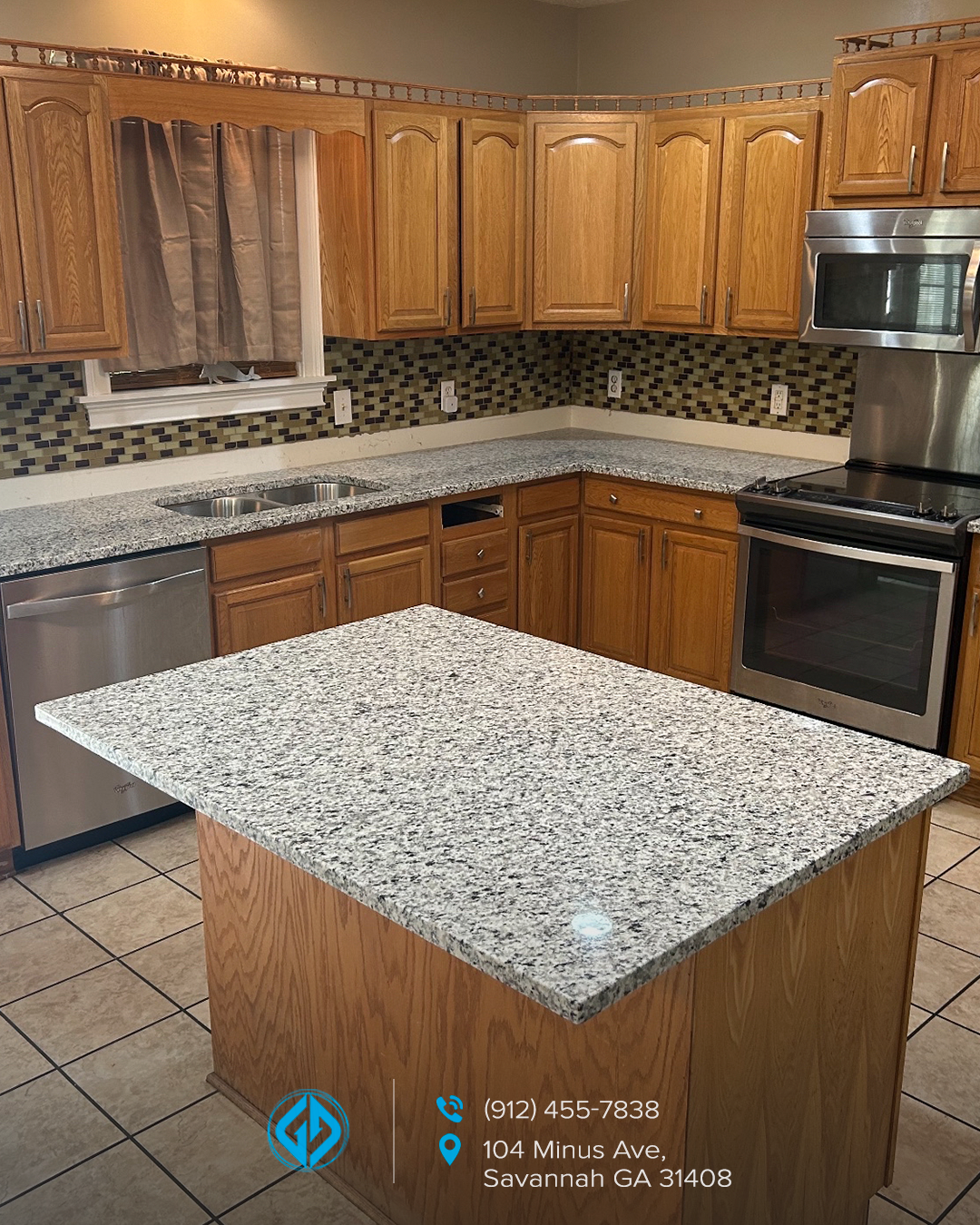
Quartz is not necessarily cheaper than granite. Both materials are available at different price points, and the final cost depends on the quality, color, thickness, fabrication requirements, and installation complexity. In many cases, entry-level granite costs less than premium quartz, while some basic quartz options are more affordable than rare or exotic granite.
At Granite Depot of Savannah, we help homeowners compare countertop materials based on their budgets, design preferences, and everyday needs. Understanding the differences between quartz and granite prices can help you choose a surface that offers the right balance of beauty, durability, and long-term value.
Is Quartz Cheaper Than Granite Per Square Foot?
No, quartz is not always cheaper than granite per square foot. Both materials have budget-friendly and premium options, so the price comparison depends on the specific slabs you choose.
As a general budgeting guide, homeowners can expect the following approximate installed price ranges:
| Countertop material | Estimated installed price per square foot | Typical characteristics |
|---|---|---|
| Entry-level granite | $40–$60 | Natural patterns and practical color options |
| Mid-range granite | $60–$90 | More distinctive colors and mineral patterns |
| Premium granite | $90–$150+ | Rare colors, dramatic veining, or exotic stone |
| Entry-level quartz | $50–$70 | Consistent colors and simple patterns |
| Mid-range quartz | $70–$100 | Marble-inspired designs and decorative patterns |
| Premium quartz | $100–$150+ | Elaborate veining and high-end designer styles |
These figures are approximate planning estimates, not guaranteed local prices. Actual costs vary by supplier, product availability, slab selection, project size, and installation requirements.
For example, a homeowner who chooses a straightforward granite color may spend less than someone selecting a premium quartz design. However, an entry-level quartz surface can be less expensive than a rare granite slab with an unusual pattern.
When comparing quartz countertops Savannah, GA, it is important to compare products within similar price categories rather than assuming one material is always the cheaper choice. Requesting estimates for specific colors and finishes is the best way to understand the difference.
What Makes Quartz and Granite Prices Different?
Quartz and granite have different compositions and manufacturing processes, which influence their prices. Granite is a natural stone extracted from quarries, while engineered quartz is manufactured using natural quartz minerals, resins, pigments, and other components.
What affects the price of granite?
Granite pricing depends on several factors, including the rarity of the stone, its origin, color, pattern, and availability. Common colors are often more affordable because suppliers can source them more readily.
Granite with unusual mineral formations, dramatic movement, or rare colors can cost significantly more. Slab thickness, surface finish, and the amount of material required for the project also affect the final price.
Factors that may increase granite costs include:
- Rare or imported stone varieties.
- Premium colors and distinctive natural patterns.
- Thicker slabs or specialty finishes.
- Complex edge profiles.
- Additional fabrication around sinks, cooktops, and corners.
- Extensive seams or difficult countertop layouts.
What affects the price of quartz?
Quartz countertops are manufactured, which allows producers to create consistent colors and repeatable patterns. However, not every quartz design costs the same amount.
A simple white, beige, or gray quartz surface may be more affordable than a premium design featuring intricate marble-like veining. Brand, collection, thickness, and availability can all affect the price.
Popular manufacturers include Caesarstone, Cambria, Silestone by Cosentino, and MSI Q Quartz. Each manufacturer offers multiple product lines, and pricing varies between collections.
When exploring quartz countertops Savannah, GA, consider the complete project cost rather than focusing exclusively on the price of the slab. Fabrication, cutouts, edges, delivery, and installation can make a noticeable difference in your final budget.
How Much Does a Quartz or Granite Kitchen Countertop Cost?
A typical kitchen countertop project can cost anywhere from approximately $1,500 to $6,000 or more, depending on the material and the total square footage. Larger kitchens, premium slabs, complicated layouts, and additional installation work can increase the price.
Consider these example budgets:
| Countertop area | Granite at $50–$90/sq. ft. | Quartz at $60–$100/sq. ft. |
|---|---|---|
| 25 square feet | $1,250–$2,250 | $1,500–$2,500 |
| 35 square feet | $1,750–$3,150 | $2,100–$3,500 |
| 45 square feet | $2,250–$4,050 | $2,700–$4,500 |
| 55 square feet | $2,750–$4,950 | $3,300–$5,500 |
These examples use illustrative installed rates and do not represent a formal quote. The actual price may be higher or lower depending on the selected material, fabrication, and site conditions.
For a 35-square-foot kitchen, for example, an entry-level granite countertop could cost less than a mid-range quartz option. If you choose premium granite and a basic quartz design, however, the result could be the opposite.
At Granite Depot of Savannah, we help customers explore countertop options and understand the details that influence the final project estimate. Comparing actual products side by side is often more useful than relying on broad averages.
Is Quartz Worth Paying More for Than Granite?
Quartz can be worth the additional cost if you value consistent patterns, a wide range of colors, and relatively straightforward routine maintenance. Granite may offer better value if you prefer natural stone, distinctive mineral patterns, and a price point that fits your budget.
Each material has advantages.
Quartz benefits:
- Consistent colors and patterns.
- A wide range of contemporary and marble-inspired designs.
- A generally nonporous surface that does not normally require routine sealing.
- Easy everyday cleaning with mild soap and water.
- Options that work well with modern, transitional, and traditional kitchens.
Granite benefits:
- Natural patterns that make each slab unique.
- A broad range of colors and mineral formations.
- Generally better tolerance of heat than engineered quartz, although sudden temperature changes can still cause damage.
- Options ranging from economical to luxurious.
- A natural stone appearance that many homeowners appreciate.
Both materials can last for many years with appropriate care. Quartz is not heatproof, so hot pans should be placed on trivets rather than directly on the countertop. Granite also benefits from heat protection, and some varieties require periodic sealing to help reduce staining.
The right choice depends on how you use your kitchen and what matters most to you. If you cook frequently, prefer a consistent design, and want to minimize routine maintenance, quartz may be appealing. If natural variation and the character of genuine stone are priorities, granite may be a better fit.
Which Countertop Requires Less Maintenance?
Quartz generally requires less routine maintenance than granite because it is nonporous and typically does not need periodic sealing. Granite is also relatively easy to care for, but the level of maintenance depends on the specific stone and whether it needs a protective sealer.
For quartz, everyday maintenance usually involves wiping the surface with a soft cloth, warm water, and mild dish soap. Avoid abrasive pads and harsh chemicals unless the manufacturer specifically approves them.
Granite maintenance typically includes the same basic cleaning routine. Depending on the stone’s porosity and the sealer used, periodic resealing may be recommended. The appropriate schedule varies, so follow the stone supplier’s instructions rather than assuming every granite countertop needs sealing at the same interval.
Here is a quick comparison:
| Maintenance factor | Quartz | Granite |
|---|---|---|
| Daily cleaning | Mild soap and water | Mild soap and water |
| Routine sealing | Generally unnecessary | May be recommended |
| Stain resistance | Generally high | Varies by stone and sealer |
| Heat protection | Trivets recommended | Trivets recommended |
| Special care | Avoid excessive heat and abrasive products | Follow sealing and stone-care guidance |
For homeowners comparing quartz countertops Savannah, GA, maintenance should be part of the value calculation. A slightly higher initial price may be worthwhile if a material better suits your preferred cleaning routine and lifestyle.
How Long Does It Take to Install Quartz or Granite Countertops?
Most countertop projects take approximately one to three weeks from final measurements to installation, although timelines depend on material availability, fabrication schedules, and the complexity of the kitchen. Installation itself may take several hours to one day for a typical project.
The process generally involves several stages:
- Material selection: This can take one day or several weeks, depending on how quickly you choose a slab.
- Templating and measurements: A specialist records the dimensions once the cabinets are ready.
- Fabrication: Cutting, edge finishing, and sink or cooktop cutouts often take several business days to two weeks, depending on the schedule.
- Installation: A straightforward kitchen may be completed in several hours, while more complex projects can require additional time.
- Final inspection: The team checks the countertop fit, seams, edges, and cutouts.
Quartz and granite follow broadly similar installation processes, although the specific slab and project requirements can affect the schedule. Delays may occur if a selected material is unavailable or if cabinetry needs adjustments before templating.
If you are considering quartz countertops Savannah, GA, ask about the estimated timeline when requesting a quote. Confirming cabinet readiness, material availability, and installation scheduling early can help you plan your renovation.
How Can You Get the Best Value When Choosing Countertops?
You can get better value by comparing specific slabs, setting a realistic budget, and considering both the initial price and ongoing maintenance. Choosing the least expensive material is not always the best decision if it does not match your design preferences or everyday needs.
Use this checklist when comparing quotes:
- Set a total budget: Include material, fabrication, installation, and any additional services.
- Compare similar products: Request prices for quartz and granite options with comparable thicknesses and finishes.
- Ask about included services: Check whether the quote covers templating, sink cutouts, edge fabrication, and installation.
- Consider the layout: Larger countertops and complicated corners can increase material and labor costs.
- Review available colors: Common colors may offer better value than specialty designs.
- Ask about care requirements: Understand whether the stone needs sealing or has specific cleaning restrictions.
- Confirm the warranty: Review the manufacturer’s coverage and any applicable installation warranty.
It is also useful to visit a showroom if possible. Photographs can help narrow down your choices, but viewing actual samples or slabs gives you a better sense of color, pattern, and finish.
At Granite Depot of Savannah, we provide countertop selection, fabrication, and installation services to help homeowners find materials that meet their design goals and budget. Our team can help you compare available quartz and granite options and understand which project details affect the estimate.
Frequently Asked Questions About Quartz and Granite Prices
Is quartz usually more expensive than granite?
Not always. Basic quartz and common granite options may have similar prices, while premium quartz and rare granite can be considerably more expensive. Compare specific products to determine which offers the best value.
What is cheaper: quartz or granite for a small kitchen?
Either material may be cheaper, depending on the selected slab and fabrication requirements. For a small kitchen, ask for estimates using the same square footage and comparable product categories.
Does quartz increase a home’s resale value?
Attractive, well-installed countertops can improve a kitchen’s appeal to potential buyers. However, the effect on resale value depends on the local market, the home’s overall condition, and buyer preferences; no particular countertop guarantees a specific return.
Does granite need to be sealed every year?
Not necessarily. Sealing frequency depends on the granite’s porosity, the sealer, and the manufacturer’s recommendations. Some granite surfaces may need more frequent attention than others.
Can I put hot pans directly on quartz?
No. Use a trivet or heat-resistant mat because excessive heat can damage the resin in engineered quartz. This precaution helps prevent discoloration, cracks, and other heat-related damage.
Which countertop is easier to clean?
Quartz is generally easier to maintain because it is nonporous and usually does not require sealing. Granite is also straightforward to clean, but some varieties need additional protection against stains.
Where can I compare quartz and granite countertops in Savannah?
You can visit Granite Depot of Savannah to explore countertop options and discuss material selection, fabrication, and installation for your project.
Where Can You Find Quartz and Granite Countertops in Savannah?
Choosing between quartz and granite does not have to be complicated. By comparing actual material prices, understanding maintenance requirements, and considering the needs of your kitchen, you can select a countertop that fits your budget and design preferences.
At Granite Depot of Savannah, we help homeowners explore available countertop materials and arrange fabrication and installation for kitchen and bathroom projects. Contact our team to discuss your ideas, compare options, and learn more about pricing and project timelines.
Visit our showroom:
Granite Depot of Savannah
104 Minus Ave
Savannah, GA 31408
Phone: (912) 455-7838
Contact us to discuss your countertop project and explore quartz and granite options for your home.