

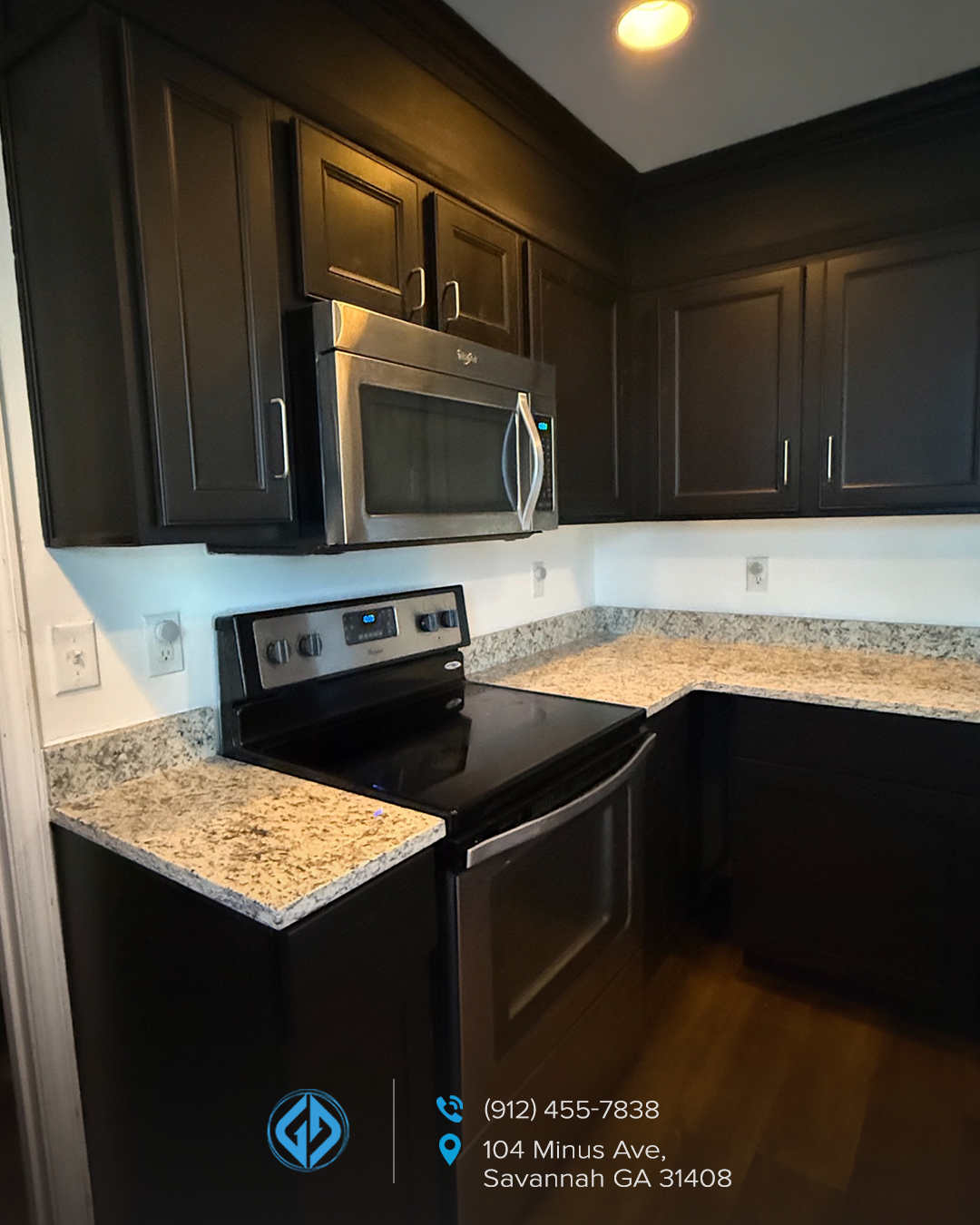
Granite countertops are known for their luxurious appearance, natural patterns, and beautiful glossy finish. Whether you see a deep black granite surface reflecting kitchen lighting or a light-colored slab with shimmering mineral details, that polished look can make an entire room feel more elegant.
But what actually gives granite that glossy look? The shine comes primarily from mechanical polishing, a process that gradually smooths the stone’s surface using specialized diamond abrasives until it becomes exceptionally smooth and reflective. The natural minerals within granite also contribute to its appearance, creating depth, sparkle, and unique visual characteristics.
At Granite Depot of Savannah, we work with natural stone every day, and we know that the right finish can completely transform a countertop. Understanding how granite gets its shine, what affects its appearance, and how to maintain it can help you make the right decision for your kitchen or bathroom.
Let’s explore what makes polished granite so attractive and how you can keep that beautiful finish looking its best.
What Makes Granite Naturally Shiny?
Granite gets part of its natural sparkle from the minerals that make up the stone, including quartz, feldspar, and mica.
Granite forms deep within the Earth’s crust as molten magma slowly cools and solidifies. This process creates an interlocking structure of mineral crystals, each with its own color, texture, and reflective properties.
Some of the most recognizable minerals include:
- Quartz: Often appears transparent, gray, white, or slightly smoky and can contribute to the stone’s reflective appearance.
- Feldspar: Creates many of the pink, white, cream, and beige tones found in granite.
- Mica: Produces small reflective flakes that can give the surface a shimmering effect.
- Amphibole: Can contribute darker green, brown, or black mineral details.
These minerals give every granite slab its distinctive character. Some varieties have subtle patterns with very little sparkle, while others contain visible mineral crystals that catch the light from different angles.
However, natural minerals alone do not create the smooth, mirror-like appearance associated with polished granite. The polishing process is what brings out the stone’s full visual potential.
When visiting granite stores Savannah, GA, we recommend looking at full slabs rather than relying only on small samples. This makes it easier to appreciate how mineral composition, pattern movement, and natural reflections work together.

How Does the Polishing Process Give Granite Its Glossy Finish?
Granite gets its glossy appearance through mechanical polishing, which removes microscopic surface irregularities and creates a smooth, reflective finish.
The process involves specialized machinery equipped with diamond abrasives. Fabricators gradually work through different abrasive levels, starting with coarser materials and moving toward increasingly fine polishing pads.
Here is how the process generally works:
Initial cutting and preparation
The granite slab is cut to the required dimensions using specialized stone-cutting equipment. Fabricators then prepare the surface and edges for finishing.
Grinding
Coarser diamond abrasives remove minor imperfections, saw marks, and uneven areas. This stage creates a consistent surface for further polishing.
Honing
Finer abrasives gradually smooth the stone. At this point, the surface becomes more uniform, although it may still have a matte or satin appearance.
Polishing
Very fine diamond polishing pads refine the surface until it develops a glossy finish. The process enhances the natural colors and patterns while creating the reflective appearance homeowners love.
Final inspection
The finished granite is checked for consistency, surface imperfections, and edge quality before installation.
The number of polishing stages depends on the stone, equipment, and desired finish. Professional fabrication is essential because natural granite varieties can respond differently to abrasives.
At Granite Depot of Savannah, we believe that quality fabrication is just as important as selecting a beautiful slab. A carefully finished surface helps showcase the natural characteristics of the stone.
Why Do Some Granite Countertops Look Shinier Than Others?
Not all granite countertops have the same level of shine because the final appearance depends on mineral composition, surface texture, polishing quality, and lighting.
For example, a granite variety with abundant quartz and reflective mica may appear more sparkling than a stone with a more uniform mineral structure.
Other important factors include:
- Color: Dark granite often creates a dramatic reflective effect, while lighter granite may produce a softer appearance.
- Mineral composition: Different minerals reflect light in different ways.
- Surface finish: Polished granite reflects more light than honed or leathered granite.
- Polishing quality: Consistent fabrication helps create an even finish.
- Lighting: Natural daylight and under-cabinet lighting can make reflective details more noticeable.
The surrounding kitchen design also matters. Glossy granite can look particularly striking when paired with matte cabinetry, brushed metal hardware, or subtle backsplash materials.
When comparing granite stores Savannah, GA, consider how the stone looks under different lighting conditions. A slab that appears relatively subtle in a showroom may look much more dramatic in a bright kitchen.
What Is the Difference Between Polished, Honed, and Leathered Granite?
The main difference between these granite finishes is the amount of surface reflection and texture.
Polished granite has a glossy, reflective surface, while honed granite has a smooth matte appearance. Leathered granite offers a textured finish with a subtle sheen and a more natural feel.
Here is a comparison:
| Granite finish | Appearance | Main characteristics | Maintenance considerations |
|---|---|---|---|
| Polished | Glossy and reflective | Enhances color and natural patterns | Easy everyday cleaning |
| Honed | Matte or satin | Soft, understated appearance | May show certain stains more easily |
| Leathered | Textured with subtle sheen | Adds depth and tactile character | Textured surface may need extra attention when cleaning |
Polished granite is the most popular option for traditional and contemporary kitchens. Its reflective finish makes colors appear deeper and helps highlight the natural mineral structure.
Honed granite is ideal for homeowners who prefer a softer, understated design. It has a smooth surface without the strong reflections of polished stone.
Leathered granite is created using specialized brushing and finishing techniques that produce a slightly textured surface. It is particularly attractive for darker granite varieties.
There is no universally best finish. The right choice depends on your design preferences, cleaning habits, and how you want the countertop to look and feel.
Does Polishing Make Granite More Durable?
Polishing primarily changes the appearance and surface texture of granite rather than significantly changing the stone’s structural durability.
Granite is naturally hard and durable because of its mineral composition. The polishing process creates a smooth finish but does not turn an otherwise weak stone into a stronger one.
However, the finish can influence certain everyday maintenance characteristics.
For example, polished granite generally has a smoother surface that makes wiping away food residue easier. Honed and leathered finishes may have more surface texture, which can require additional attention during cleaning.
It is also important to understand that a polished surface is not completely scratch-proof or stain-proof.
We recommend using cutting boards, cleaning spills promptly, and avoiding harsh chemicals regardless of the finish you choose.
For homeowners exploring granite stores Savannah, GA, comparing different finishes is a great way to find a countertop that balances appearance and practicality.
Can You Restore the Glossy Look of Dull Granite?
Yes. In many cases, dull granite can regain its original shine through professional cleaning, polishing, or stone restoration.
However, the correct solution depends on why the countertop lost its glossy appearance.
Common causes include:
- Soap or cleaning-product residue.
- Mineral deposits from hard water.
- Grease and cooking oils.
- Abrasive cleaning materials.
- Surface etching or physical wear.
- Improper use of topical polishing products.
If the problem is simply residue, a pH-neutral stone cleaner and a microfiber cloth may be enough to improve the appearance.
If the surface has developed scratches or lost its original polish, professional restoration may be necessary. A stone specialist can use diamond abrasives and polishing compounds to refine the surface and restore its reflective finish.
For more serious damage, the countertop may require several restoration stages.
Here are some approximate 2026 U.S. market costs:
| Service | Estimated price |
|---|---|
| Granite stone cleaner | $10–$25 |
| Granite polishing cream | $15–$40 |
| Professional countertop cleaning | $100–$250 |
| Professional polishing | $3–$8 per sq. ft. |
| More extensive restoration | $5–$15+ per sq. ft. |
Actual prices depend on the countertop’s size, condition, accessibility, and the amount of restoration work required.
A standard countertop cleaning appointment may take approximately 1–2 hours, while professional polishing can take several hours or longer. More extensive restoration projects may require 1–2 days.
When visiting granite stores Savannah, GA, ask about the recommended care products for your particular stone. Using the wrong polishing product can leave residue or create an uneven appearance.
How Can You Keep Granite Countertops Shiny for Years?
The best way to maintain glossy granite is to clean it regularly with gentle, stone-safe products and avoid anything that can damage its finish.
Polished granite is relatively easy to maintain, but everyday habits make a difference.
Here are our recommendations:
- Use a pH-neutral stone cleaner: Choose a product specifically formulated for natural stone.
- Wipe spills promptly: Remove coffee, wine, oils, and acidic liquids as soon as possible.
- Use microfiber cloths: Soft materials help clean the surface without unnecessary abrasion.
- Avoid vinegar and lemon juice: Acidic substances can damage certain minerals and stone finishes.
- Skip abrasive powders: Rough cleaning products can dull the surface.
- Dry after cleaning: A clean microfiber cloth helps prevent water spots and streaks.
- Use cutting boards: Avoid direct knife contact with the granite.
- Use trivets: Protect the countertop from unnecessary thermal stress.
You should also avoid using furniture polish, wax, or generic countertop shine sprays unless the granite manufacturer specifically approves them.
These products may create a temporary glossy appearance but can leave a sticky film that attracts dust and makes the surface harder to clean.
Does Granite Need to Be Sealed to Maintain Its Shine?
No. Sealing granite is primarily intended to reduce liquid absorption and staining, not to create a glossy finish.
A polished granite countertop gets its shine from the mechanical polishing process. Applying a penetrating stone sealer does not normally increase its reflectivity.
However, sealing may be important for protecting porous granite varieties from moisture and everyday spills.
The frequency depends on the particular stone and the sealer used. Some granite varieties may benefit from annual sealing, while denser stones can go several years without additional treatment.
Popular natural stone sealers include:
- StoneTech BulletProof Sealer.
- Miracle Sealants 511 Impregnator.
- Dry-Treat Stain-Proof.
- Granite Gold Sealer.
Always check compatibility with your specific granite variety and follow the product instructions.
At Granite Depot of Savannah, we encourage homeowners to distinguish between polishing and sealing because both serve different purposes. Polishing improves the appearance, while sealing helps protect the stone against absorption.
How Much Does a Polished Granite Countertop Cost?
The price of polished granite depends on the stone variety, slab thickness, color, fabrication details, and installation requirements.
As a general 2026 U.S. market estimate, installed granite countertops typically cost approximately $50–$150+ per square foot.
Here is a simple pricing guide:
| Granite category | Estimated installed price per sq. ft. |
|---|---|
| Standard granite | $50–$80 |
| Mid-range granite | $70–$110 |
| Premium granite | $100–$150+ |
| Specialty natural stone | $150+ |
For a typical kitchen requiring 40–50 square feet of countertop material, homeowners might budget approximately $2,000–$5,500 for many standard and mid-range granite selections.
Additional expenses may include:
- Custom edge profiles.
- Sink and cooktop cutouts.
- Backsplash fabrication.
- Removal of existing countertops.
- Special slab handling.
- Complex installation layouts.
The fabrication and installation process typically takes approximately 1–3 weeks, depending on material availability and scheduling. Once the countertop is ready, installation usually takes one day for a standard kitchen.
When comparing granite stores Savannah, GA, we recommend requesting a project-specific estimate that includes material, fabrication, and installation rather than relying only on advertised square-foot pricing.

Frequently Asked Questions About Granite’s Glossy Finish
Is glossy granite naturally shiny?
Granite contains reflective minerals such as quartz and mica, but its mirror-like appearance comes primarily from mechanical polishing. Polishing smooths the surface and enhances its natural reflective qualities.
Does polished granite lose its shine over time?
Polished granite can become dull because of residue, scratches, or improper cleaning products. Regular maintenance and professional restoration when necessary can help preserve its appearance.
Can I make granite shiny with olive oil?
We do not recommend using olive oil or cooking oils to polish granite. These products can leave greasy residue, attract dirt, and potentially create stains.
Is polished granite better than leathered granite?
Neither finish is universally better. Polished granite offers a glossy, reflective appearance and easy everyday cleaning, while leathered granite provides texture and a more understated look.
Does granite polishing remove scratches?
Professional polishing can remove certain superficial scratches by refining the stone’s surface. Deeper scratches and chips may require additional repair techniques.
Can I use Windex on polished granite?
It is safer to use a pH-neutral cleaner specifically formulated for natural stone. Some glass cleaners contain ingredients that may be unsuitable for certain stone surfaces or sealers.
How long does a polished granite finish last?
With appropriate care, a polished granite finish can last for decades. Heavy use, abrasive cleaning, and improper maintenance may eventually create dull areas that require professional attention.
Does sealing make granite more glossy?
No. Standard penetrating sealers protect against liquid absorption but do not create the reflective appearance associated with polished granite. The gloss comes from the polishing process.
Discover Beautiful Polished Granite at Granite Depot of Savannah
The glossy appearance of granite comes from a combination of natural mineral characteristics and professional mechanical polishing. Quartz and mica contribute to the stone’s natural sparkle, while diamond abrasives create the smooth, reflective finish that makes polished granite so popular.
At Granite Depot of Savannah, we help homeowners explore natural stone options and choose countertops that complement their kitchens, bathrooms, and overall interior design. Our services include stone selection, custom countertop fabrication, and professional installation.
Whether you prefer classic polished granite, textured leathered finishes, or elegant marble and quartzite, our showroom offers a variety of materials to explore.
If you are searching for granite stores Savannah, GA, we invite you to visit us and see the natural beauty of our stone selections in person.
Granite Depot of Savannah
Address: 104 Minus Ave, Savannah, GA 31408
Phone: (912) 455-7838
Showroom Hours:
- Monday–Friday: 9:00 AM–5:00 PM
- Saturday: 10:00 AM–3:00 PM
- Sunday: Closed