

Quartz countertops have become one of the most popular choices for homeowners due to their durability, aesthetic appeal, and low-maintenance nature. These engineered stone surfaces are made from a mixture of natural quartz crystals and resins, creating a highly durable, non-porous surface that resists stains and bacteria. However, like any material, quartz has its drawbacks that homeowners should be aware of before making a final decision. In this article, we will explore some of the negatives of quartz kitchen countertops Richmond Hill, GA homeowners should consider before choosing quartz for their home. We’ll look at common concerns such as heat sensitivity, cost, and the impact of harsh chemicals.
1. Heat Sensitivity
One of the main drawbacks of quartz kitchen countertops Richmond Hill, GA is their sensitivity to high heat. Although quartz is heat-resistant to some extent, it is not heatproof. The resins used to bind the quartz particles together are not as heat-resistant as natural stone like granite. Exposing quartz countertops to extreme temperatures can cause permanent damage.
How Heat Can Damage Quartz
Placing hot pots, pans, or baking sheets directly on the surface of a quartz countertop can lead to discoloration, burn marks, or even cracks. The resin in quartz countertops can melt or become discolored when exposed to high heat, leading to unsightly blemishes that cannot be repaired without replacing the affected area.
How to Protect Quartz from Heat Damage
To avoid heat damage, it’s important to always use trivets, hot pads, or heat-resistant mats when placing hot cookware on quartz countertops. While quartz can handle everyday kitchen tasks like preparing food and placing moderately warm dishes, it’s best to avoid direct contact with high heat sources to ensure the longevity of your countertops.
2. Cost
Another disadvantage of quartz kitchen countertops Richmond Hill, GA is the cost. Quartz is often more expensive than other countertop materials like laminate, tile, or solid surface options. While it is generally less expensive than high-end natural stones like marble, the price of quartz can still be a significant factor for homeowners on a budget.
Factors Influencing the Cost of Quartz Countertops
The price of quartz countertops depends on various factors, including the brand, thickness, quality, and pattern of the quartz. Additionally, custom fabrication, edge treatments, and installation fees can add to the overall cost. Homeowners who are looking for a cost-effective option may find quartz to be out of their budget, especially if they want premium or unique designs.
Weighing Cost vs. Durability
While quartz may come with a higher price tag, its durability and low-maintenance qualities can offset the initial investment in the long run. Unlike cheaper materials that may need to be replaced or repaired frequently, quartz countertops offer a longer lifespan, making them a worthwhile investment for many homeowners. However, for those with budget constraints, the cost of quartz can be a drawback.
3. Limited Heat and UV Resistance Outdoors
While quartz countertops are excellent for indoor use, they are not suitable for outdoor applications due to their vulnerability to UV light. If exposed to direct sunlight for extended periods, quartz countertops can fade, discolor, or degrade over time. This makes quartz less than ideal for outdoor kitchens, barbecue areas, or any space where countertops will be exposed to sunlight.
How UV Rays Affect Quartz
The resins used in quartz countertops can break down when exposed to UV rays, causing the surface to fade or yellow. This type of damage is irreversible, and unlike natural stones like granite or concrete, quartz is not UV-resistant. As a result, homeowners looking for a countertop material for outdoor spaces may need to consider alternatives to quartz.
Alternative Options for Outdoor Spaces
For homeowners who want the look and durability of stone in an outdoor setting, materials like granite, concrete, or porcelain are better suited for handling the elements. These materials can withstand both heat and UV exposure, making them a better choice for outdoor countertops.
4. Lack of Customization with Patterns and Colors
While quartz countertops come in a wide range of colors and patterns, they may not offer the same level of uniqueness as natural stone. Because quartz is an engineered product, its patterns tend to be more uniform and less varied than natural materials like granite or marble. This can be a drawback for homeowners who want a truly one-of-a-kind countertop with natural variation.
Engineered vs. Natural Patterns
The manufacturing process of quartz ensures that each slab has a consistent appearance, which can be a positive feature for homeowners seeking uniformity in their countertops. However, some homeowners prefer the natural veining and unpredictable beauty of materials like granite or marble, which offer a more organic look. Quartz can mimic the appearance of natural stone, but it may lack the depth and variation that make natural stone surfaces so appealing to some.
Limited Options for Unique Designs
While quartz offers a wide variety of colors and patterns, it may not provide the level of customization that some homeowners are looking for. Those who want highly unique or rare stone patterns may find that quartz falls short in delivering the natural variations found in other materials. For homeowners seeking a more natural aesthetic, this uniformity may be considered a disadvantage.
5. Weight
Quartz countertops are extremely heavy, which can be both a benefit and a disadvantage. While the weight of quartz contributes to its durability and solid feel, it also requires additional structural support during installation. This can lead to higher installation costs and may require modifications to existing cabinetry or supports in some cases.
Installation Challenges
The weight of quartz kitchen countertops Richmond Hill, GA can make installation more complex and costly compared to lighter materials like laminate or solid surface countertops. Professional installation is essential, as improper handling or installation of quartz can result in cracks or other damage. Additionally, some homeowners may need to reinforce their cabinetry or add extra support to handle the weight of quartz countertops, further increasing the cost of the project.
Comparisons to Other Materials
Quartz is generally heavier than materials like laminate, wood, or tile, which are easier to install and may not require the same level of structural support. For homeowners who prioritize ease of installation or are working with older cabinetry, the weight of quartz may be a disadvantage to consider.
6. Vulnerability to Harsh Chemicals
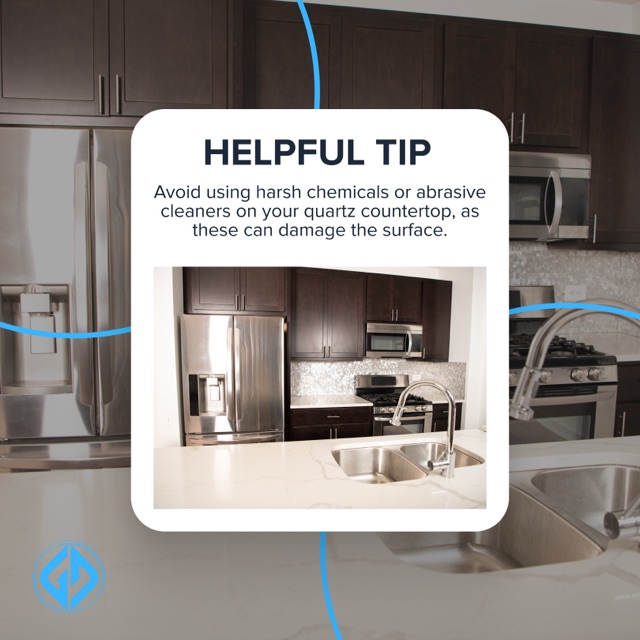
Quartz countertops are known for being low-maintenance, but they are not impervious to damage from certain chemicals and cleaning products. Harsh chemicals, such as bleach, ammonia, and strong acids, can damage the resin in quartz countertops, leading to discoloration, dullness, or surface degradation.
Chemicals to Avoid
Household cleaners containing bleach, vinegar, ammonia, or other harsh ingredients should be avoided when cleaning quartz countertops. These chemicals can break down the resins in quartz, causing permanent damage to the surface. Abrasive scrubbers or scouring pads can also scratch or dull the surface of quartz countertops, so they should be avoided as well.
Safe Cleaning Practices
To keep your quartz kitchen countertops Richmond Hill, GA looking their best, it’s essential to use mild, pH-neutral cleaners or a solution of water and mild dish soap. A soft cloth or sponge can be used to clean the surface, and spills should be wiped up promptly to prevent any potential damage. Regular cleaning with gentle products will help maintain the beauty and longevity of quartz countertops without risking damage from harsh chemicals.
7. Visible Seams
While quartz countertops are custom-made to fit your kitchen, seams are often necessary when covering large areas or complex countertop layouts. These seams, though minimized as much as possible, may still be visible depending on the layout and pattern of the quartz.
Seams in Quartz Countertops
Seams are most commonly found in larger kitchens or countertops with corners and turns. While professional installers do their best to match the patterns and color of the quartz at the seams, they may still be noticeable, especially in countertops with bold patterns or light colors. This is a minor drawback for some homeowners who want a completely seamless appearance.
Managing Visible Seams
If you’re concerned about visible seams, you can work with your fabricator to strategically place the seams in less noticeable areas, such as near the sink or stove. Additionally, choosing quartz with a more consistent, uniform pattern can help minimize the appearance of seams.
While quartz countertops offer numerous benefits, including durability, low maintenance, and a wide range of design options, they also have some drawbacks to consider. Heat sensitivity, cost, limited outdoor use, and vulnerability to harsh chemicals are all factors that homeowners should weigh before choosing quartz kitchen countertops Richmond Hill, GA. However, for those seeking a long-lasting, beautiful, and low-maintenance surface, quartz remains one of the best options available. At Granite Depot of Savannah, we’re here to help you make the right choice for your kitchen. Contact us today to learn more about our quartz countertop options and how we can help bring your vision to life.