


A countertop is a horizontal surface installed over cabinets, islands, vanities, or other fixtures to provide a durable and functional work area. In kitchens and bathrooms, countertops are used every day for preparing food, organizing personal items, placing appliances, and completing everyday household tasks.
The right countertop can also become one of the most noticeable design features in a room. Material, color, thickness, edge profile, finish, and installation all affect how the finished space looks and performs.
At Granite Depot of Savannah, we help homeowners choose countertop materials based on style, durability, maintenance requirements, and budget. If you are researching countertops Hampton, SC, understanding what a countertop is and how different materials perform can make the buying process much easier.
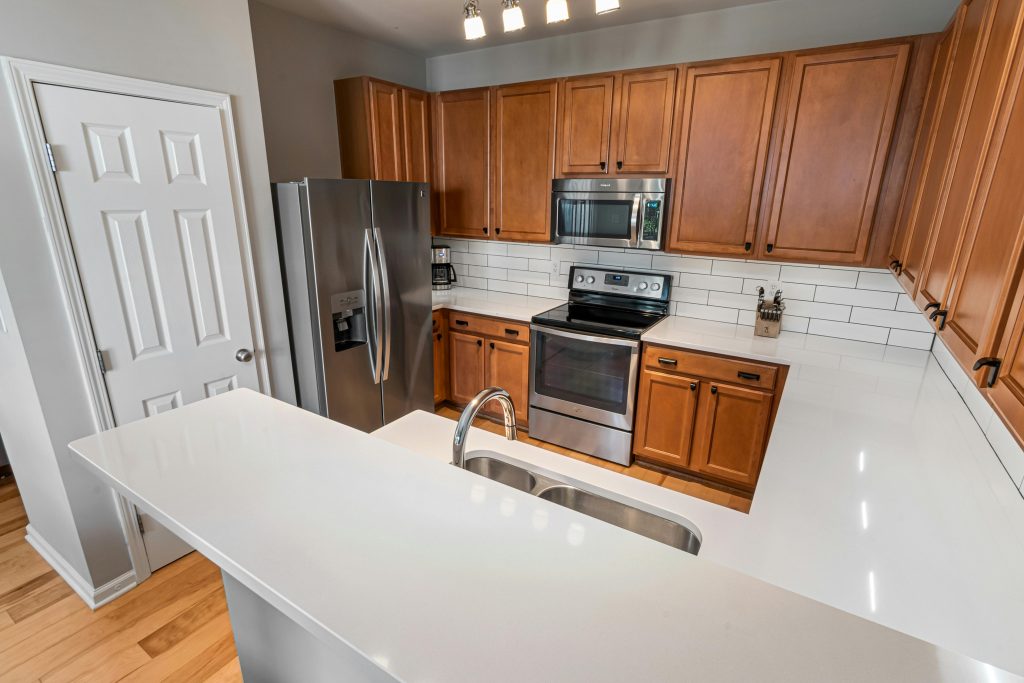
What exactly is a countertop?
A countertop is a finished horizontal surface designed to cover cabinets or support a work area. Countertops are commonly installed in kitchens, bathrooms, laundry rooms, outdoor kitchens, bars, islands, and other areas of a home.
A countertop can serve several purposes at the same time. It provides usable workspace while also helping define the appearance of the room.
Common countertop functions include:
- Food preparation
- Cooking and serving
- Bathroom vanity space
- Storage and organization
- Appliance placement
- Decorative design
- Workspace for daily activities
Kitchen countertops are generally larger and may require openings for sinks, faucets, cooktops, and other fixtures. Bathroom countertops are usually smaller but still require precise measurements and cutouts.
For homeowners comparing countertops Hampton, SC, the first step is understanding how the countertop will be used.
What materials are countertops made from?
Countertops can be made from natural stone, engineered materials, porcelain, solid surfaces, laminate, wood, concrete, and other products. Granite, quartz, marble, and quartzite are among the most popular premium countertop materials.
Granite
Granite is a natural stone formed from mineral-rich geological processes. Every slab can have its own combination of colors, patterns, movement, and mineral deposits.
Granite is popular because it offers excellent durability and a natural appearance. Common varieties include Black Galaxy, Alaska White, Colonial White, and Ubatuba.
Quartz
Quartz countertops are engineered using quartz minerals, resins, pigments, and other components. The manufacturing process allows manufacturers to create consistent patterns and colors.
Popular quartz manufacturers include Cambria, Caesarstone, Silestone, and MSI. White quartz with marble-inspired veining is particularly popular in modern kitchens and bathrooms.
Marble
Marble is a natural stone recognized for its elegant veining and sophisticated appearance. Carrara, Calacatta, and Statuario are well-known marble varieties.
Marble can create a luxurious appearance, but it requires more care because it can scratch and etch more easily than some other countertop materials.
Quartzite
Quartzite is a natural stone that offers a combination of durability and distinctive natural patterns. Taj Mahal quartzite, for example, is known for warm tones and subtle veining.
Quartzite is often selected by homeowners who want the appearance of natural stone with excellent hardness and durability.
Why are countertops important in a kitchen?
Countertops are important in a kitchen because they provide the primary work surface for food preparation, cooking, serving, and everyday activities. They also occupy a significant amount of visible space, making them an important part of the overall kitchen design.
A kitchen countertop must balance function and appearance. It should provide enough workspace while coordinating with cabinets, flooring, backsplash tile, appliances, and lighting.
When selecting a kitchen countertop, consider:
- Available workspace
- Island dimensions
- Sink placement
- Cooktop location
- Cabinet color
- Backsplash design
- Material durability
- Maintenance requirements
- Budget
A large island may become the visual centerpiece of the kitchen, so the slab selection can be particularly important.
What is the difference between a kitchen and bathroom countertop?
Kitchen and bathroom countertops serve different purposes, although both provide a finished surface over cabinets. Kitchen countertops generally require more workspace and may need multiple cutouts, while bathroom countertops are often smaller and designed around a vanity and sink.
Kitchen countertops may include:
- Sink cutouts
- Cooktop openings
- Large islands
- Peninsula sections
- Appliance clearances
- Larger overhangs
Bathroom countertops may include:
- Single or double sink cutouts
- Faucet holes
- Shorter vanity runs
- Backsplash sections
- Wall-to-wall installations
For countertops Hampton, SC, material selection should reflect the room’s intended use. Quartz can be convenient for both kitchens and bathrooms, while granite, marble, and quartzite can provide distinctive natural-stone designs.
How thick should a countertop be?
Most residential stone countertops are commonly fabricated at approximately 2 cm or 3 cm thickness, with 3 cm often selected for a substantial appearance without requiring a laminated edge.
The ideal thickness depends on the material, design, cabinet construction, edge profile, and homeowner preference.
| Thickness | Approximate Thickness | Typical Application |
|---|---|---|
| 2 cm | About 0.79 in. | Modern or lighter installations |
| 3 cm | About 1.18 in. | Popular premium residential choice |
| Custom laminated edge | Varies | Thicker visual appearance |
A laminated edge can make a thinner slab appear substantially thicker. This approach is sometimes used to create a bold edge around islands or other prominent surfaces.
How much does a countertop cost?
A countertop can cost anywhere from approximately $20 to $150+ per square foot installed, depending on the material and customization. Premium natural stone, complex fabrication, unusual edges, large islands, and specialty slabs can increase the final price.
Typical planning ranges include:
| Material | Approximate Installed Price |
| Laminate | $20–$50 per sq. ft. |
| Granite | $40–$100+ per sq. ft. |
| Quartz | $50–$120+ per sq. ft. |
| Marble | $60–$150+ per sq. ft. |
| Quartzite | $70–$150+ per sq. ft. |
| Porcelain | $50–$120+ per sq. ft. |
These are general U.S. price ranges rather than guaranteed quotes. The final price depends on slab selection, dimensions, sink cutouts, edge treatment, backsplash requirements, delivery, and installation.
A small bathroom vanity may cost approximately $500–$2,000, while a larger kitchen countertop project can easily reach $2,000–$6,000 or more.
How long does it take to get a new countertop?
A typical countertop project can take approximately one to three weeks from material selection and templating to installation. Standard fabrication may take around 5–10 business days after measurements and material approval.
A typical schedule can include:
- Material selection: 1–3 days
- Templating: 1–3 days
- Fabrication: 5–10 business days
- Installation: Usually 1 day
Special-order slabs, complicated kitchen layouts, waterfall edges, large islands, or unusual materials can require additional time.
At Granite Depot of Savannah, we recommend confirming material availability and the estimated fabrication schedule before coordinating the rest of a remodeling project.
What makes a good countertop?
A good countertop combines durability, functionality, attractive design, and appropriate maintenance requirements. The best material depends on how the surface will be used and how much maintenance the homeowner is willing to perform.
For example, quartz may be a strong choice for homeowners who prefer a low-maintenance engineered material. Granite can be a better fit for someone who wants natural stone variation and a durable surface.
Marble can be ideal for a homeowner who prioritizes luxury and distinctive veining. Quartzite can offer natural beauty with excellent hardness.
Consider these factors before purchasing:
- Durability
- Moisture resistance
- Stain resistance
- Scratch resistance
- Heat resistance
- Maintenance
- Appearance
- Price
- Availability
- Installation requirements
How do you choose the right countertop color?
The right countertop color should coordinate with cabinets, flooring, backsplash, walls, appliances, and lighting. White and light-gray countertops can create a bright appearance, while darker surfaces can provide contrast.
Natural granite and quartzite can contain several colors within one slab. This means it is important to look at a large sample or, when possible, the actual slab rather than relying only on a small showroom sample.
Popular design directions include:
- White quartz with gray veining
- Warm beige granite
- Black granite
- Gray quartz
- Cream-colored quartzite
- White Carrara marble
- Dark charcoal surfaces
If you are comparing countertops Hampton, SC, we recommend considering the entire room rather than choosing the countertop color independently.
What countertop edge profiles are available?
Countertop edge profiles determine how the finished edge looks and feels. Common options include eased, pencil, bullnose, beveled, and ogee profiles.
An eased edge provides a simple contemporary appearance. A bullnose edge has a more rounded appearance, while an ogee profile offers a decorative shape often associated with traditional interiors.
Popular options include:
- Eased edge
- Pencil edge
- Half bullnose
- Full bullnose
- Beveled edge
- Ogee edge
The price can vary depending on the selected profile and the fabricator. Simple edges are generally less expensive than highly decorative profiles.
Why is professional countertop fabrication important?
Professional fabrication is important because a countertop must be accurately measured, cut, shaped, polished, and prepared for installation. A mistake during fabrication can be expensive, particularly when working with a large natural-stone slab.
Fabrication can include:
- Precise measurements
- Digital or physical templating
- Slab layout
- Sink cutouts
- Faucet holes
- Cooktop cutouts
- Edge shaping
- Polishing
- Seam preparation
The layout stage is especially important for granite, marble, and quartzite because natural patterns can vary significantly throughout a slab.
How does Granite Depot of Savannah help with countertop projects?
Granite Depot of Savannah provides countertop selection, fabrication, and installation services for homeowners planning kitchen and bathroom renovations. We help customers compare materials, colors, thicknesses, edge profiles, and design options.
We work with popular materials such as granite, quartz, marble, and quartzite and can help coordinate details such as sink cutouts, backsplashes, islands, and custom countertop dimensions.
For homeowners researching countertops Hampton, SC, our goal is to make the process easier by helping you select a material that fits your design preferences, budget, and practical requirements.
What questions should you ask before buying a countertop?
You should ask about material, total price, fabrication, installation, maintenance, and estimated completion time before approving a countertop project.
Useful questions include:
- What material is being quoted?
- Is the price per square foot or a total project price?
- Is fabrication included?
- Is installation included?
- Are sink cutouts included?
- Are faucet holes included?
- Which edge profiles are available?
- Is backsplash material included?
- How long will fabrication take?
- Is the selected slab currently available?
- Does the material require sealing?
- What maintenance products are recommended?
Getting these details in writing can make it easier to compare countertop companies and avoid unexpected costs.

Frequently Asked Questions
What is the simplest definition of a countertop?
A countertop is a horizontal finished surface installed over cabinets or another supporting structure. It provides workspace while contributing to the overall design of the room.
What is the most popular countertop material?
Quartz is one of the most popular residential countertop materials because it offers many styles and colors with relatively low maintenance. Granite remains popular for homeowners who prefer natural stone.
Are granite countertops expensive?
Granite typically costs approximately $40–$100+ per square foot installed. Premium granite slabs and complicated fabrication can cost more.
How long does a countertop last?
A quality countertop can last for decades when properly installed and maintained. The expected lifespan depends on the material, usage, care, and installation quality.
Do all countertops need to be sealed?
No. Quartz and many porcelain surfaces generally do not require routine sealing. Some natural stones, including many granite, marble, and quartzite varieties, may benefit from sealing.
Can countertops be customized?
Yes. Countertops can be customized in dimensions, edge profiles, sink cutouts, faucet holes, cooktop openings, thickness, and other design details.
What is the best countertop for a bathroom?
Quartz is often an excellent bathroom choice because it is nonporous and low-maintenance. Granite, marble, quartzite, and porcelain can also be excellent depending on the desired appearance and maintenance preferences.
How can you contact Granite Depot of Savannah?
Granite Depot of Savannah provides countertop selection, fabrication, and installation services for kitchen and bathroom remodeling projects. We can help you compare natural and engineered surfaces and select an option that fits your space and budget.
If you are researching countertops Hampton, SC, we can help you understand the differences between materials, pricing, fabrication, and installation before you make a final decision.
Granite Depot of Savannah
Address: 104 Minus Ave, Savannah, GA 31408
Contact: (912) 455-7838