

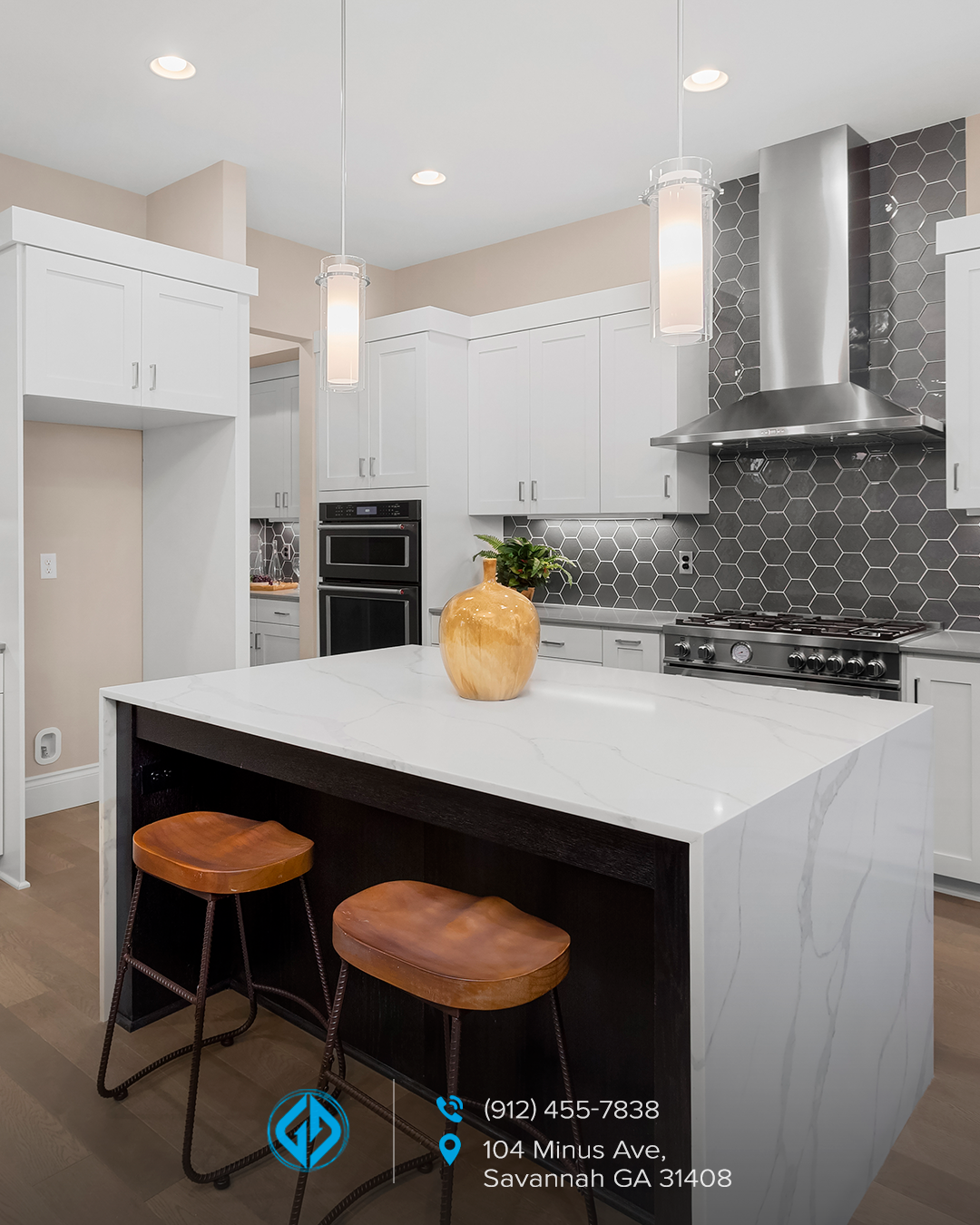
When homeowners begin planning a new kitchen or bathroom, they often focus on choosing the right countertop material but know less about the skilled professionals who transform a large slab into a finished surface. The person who cuts and prepares countertops is generally called a countertop fabricator or stone fabricator.
A countertop fabricator does much more than simply cut stone. We measure the project, prepare templates, operate specialized equipment, create sink and cooktop cutouts, finish edges, and prepare the material for installation.
Understanding the fabrication process can help you appreciate why precise measurements and professional workmanship are so important. Whether you choose granite, quartz, marble, or quartzite, the quality of fabrication can have a major effect on how your finished countertop looks and performs.
At Granite Depot of Savannah, we help homeowners select countertop materials and coordinate professional fabrication and installation for kitchens, bathrooms, and other residential projects. From the initial material selection to the finished surface, every stage requires careful planning.

What Is a Person Who Cuts Countertops Called?
A person who cuts, shapes, and prepares countertops is commonly called a countertop fabricator, stone fabricator, or countertop fabricator technician. Depending on the company and the type of material, the job title may vary.
For natural stone projects, professionals may also be referred to as stone workers or stone fabricators. In modern fabrication shops, these specialists combine hands-on experience with advanced machinery to create precise finished pieces.
When homeowners search for countertop fabricators Savannah, GA, they are usually looking for professionals who can handle several stages of the project, including:
- Measuring the installation area.
- Creating accurate templates.
- Cutting countertop slabs.
- Producing sink and cooktop openings.
- Shaping and polishing edges.
- Preparing seams.
- Inspecting the finished pieces.
- Coordinating delivery and installation.
Fabrication is especially important because countertop materials can be heavy, expensive, and difficult to repair once incorrectly cut. Accurate planning before cutting begins helps reduce waste and ensures that the finished countertop fits the cabinets correctly.
What Does a Countertop Fabricator Actually Do?
A countertop fabricator transforms a raw slab or countertop material into custom pieces designed for a specific home. The work combines precise measurement, technical knowledge, specialized equipment, and careful finishing.
The process often begins after the homeowner has selected a material and the cabinets are ready. The fabricator needs accurate dimensions because walls, cabinets, and room layouts are rarely perfectly uniform.
How Is the Countertop Measured?
The countertop must be measured before fabrication begins. This process is often called templating.
During templating, we document the dimensions of the countertop area, including wall angles, cabinet positions, overhangs, sink locations, cooktop openings, and other important details.
The selected sink and faucet should ideally be confirmed before the final template is created. This helps ensure that cutouts are fabricated according to the correct specifications.
Even a small measuring error can create major problems when working with heavy stone. This is one reason professional countertop fabricators Savannah, GA play such an important role in a successful installation.
How Do Fabricators Cut Granite and Other Countertop Materials?
Countertop fabricators use specialized machinery and tools designed for dense materials such as granite, quartz, quartzite, and marble. The exact equipment depends on the material and the complexity of the project.
A fabrication shop may use:
- Bridge saws for straight and precise cuts.
- CNC machines for detailed cutting and shaping.
- Diamond blades designed for stone.
- Water-cooled cutting systems to control dust and heat.
- Polishing tools for finishing edges.
- Digital measuring equipment for accurate templates.
Diamond tools are commonly used because natural stone is extremely hard. The cutting process must also be carefully controlled to reduce the risk of chipping or damaging the slab.
Modern technology allows fabricators to create highly accurate sink openings, edge profiles, and other custom details. However, skilled craftsmanship remains important, particularly during finishing and quality inspection.
What Is the Difference Between a Fabricator and a Countertop Installer?
A fabricator prepares the countertop material, while an installer places and secures the finished countertop in the home. In some companies, the same team may handle both parts of the project.
Here is a simple comparison:
| Professional | Main responsibilities |
|---|---|
| Countertop fabricator | Measures, cuts, shapes, and finishes the countertop |
| Countertop installer | Delivers, positions, joins, and secures the countertop |
| Plumber | Connects the sink, faucet, drain, and water supply |
| Cabinet installer | Installs and levels cabinets before countertop templating |
The fabrication process normally happens before installation. Once the countertop pieces have been cut and finished, they are carefully transported to the home.
At Granite Depot of Savannah, our countertop services help customers move from material selection through fabrication and installation planning. Coordinating these stages carefully helps reduce delays and ensures that the finished pieces fit the project correctly.
Which Materials Can a Countertop Fabricator Work With?
Countertop fabricators can work with many different materials, although the equipment and techniques may change depending on the surface. Granite, quartz, quartzite, and marble are among the most common materials for custom fabrication.
Is Granite Difficult to Fabricate?
Yes, granite requires specialized cutting and polishing equipment because it is a dense natural stone. It is highly durable, but its hardness means that fabrication must be performed using appropriate diamond tools and machinery.
Popular granite varieties include Absolute Black, Black Galaxy, White Ice, Colonial White, and Luna Pearl. Each slab can have different mineral patterns and characteristics.
Because granite is a natural material, fabricators also need to consider fissures, veins, and natural variations when planning cuts and seams.
Is Quartz Fabricated Differently?
Quartz also requires professional fabrication, but it is an engineered material with more controlled patterns and colors than natural stone. It is commonly made from natural quartz particles combined with resins and pigments.
Popular brands include Cambria, Caesarstone, Silestone, and MSI Q Quartz. Many collections are designed to resemble natural marble or feature modern solid colors.
Quartz is nonporous and generally does not require sealing. However, it should still be fabricated carefully because the material can chip or crack if handled improperly.
What About Marble and Quartzite?
Marble and quartzite require careful fabrication because they are natural stones with unique structural characteristics. The fabricator must evaluate each slab and plan the cuts based on the specific material.
Marble varieties such as Carrara, Calacatta, and Statuario are known for their elegant veining. Quartzite varieties such as Taj Mahal and Mont Blanc are valued for their durability and dramatic natural movement.
For homeowners comparing countertop fabricators Savannah, GA, it is important to choose professionals with experience handling the specific material selected for the project.
How Long Does Countertop Fabrication Take?
Most countertop projects take approximately one to three weeks from final measurements to installation. The exact schedule depends on material availability, fabrication workload, countertop complexity, and the number of custom details required.
A typical project timeline may look like this:
| Project stage | Estimated timeframe |
|---|---|
| Material selection | 1–3 days |
| Cabinet preparation | Varies by project |
| Templating and final measurements | 1 day |
| Fabrication | 5–10 business days |
| Delivery and installation | Usually 1 day |
| Plumbing reconnection | Same day or within 1–2 days |
Custom projects may take longer. Large kitchen islands, complicated edge profiles, multiple seams, waterfall panels, and special-order materials can add additional fabrication time.
It is usually best to schedule countertop templating only after cabinets have been permanently installed and leveled. Moving cabinets after measurements are taken can affect the final fit.
How Much Does Professional Countertop Fabrication Cost?
Countertop fabrication costs vary depending on the material, thickness, project size, and complexity of the cuts and finishing. The stone itself is only one part of the total project cost.
The following are general installed price ranges for planning purposes:
| Material | Approximate installed price per sq. ft. |
|---|---|
| Basic granite | $40–$70 |
| Premium granite | $70–$120+ |
| Quartz | $50–$120+ |
| Quartzite | $80–$200+ |
| Marble | $60–$200+ |
| Solid surface | $50–$100 |
A standard kitchen with approximately 40 square feet of countertop space may cost several thousand dollars depending on the selected material and fabrication details.
Additional costs may be associated with:
- Sink cutouts.
- Cooktop openings.
- Faucet holes.
- Custom edge profiles.
- Full-height backsplashes.
- Waterfall panels.
- Additional seams.
- Reinforcement or support requirements.
When comparing quotes from countertop fabricators Savannah, GA, ask whether the estimate includes measuring, fabrication, delivery, and installation. A detailed estimate makes it easier to understand the full scope of the project.
Why Is Precision So Important When Cutting Countertops?
Precision is essential because countertop materials cannot easily be adjusted after major fabrication mistakes. A cut that is too large or incorrectly positioned can sometimes require an entirely new piece of material.
Accurate fabrication is particularly important around:
- Sinks.
- Cooktops.
- Faucet holes.
- Seams.
- Wall intersections.
- Cabinet edges.
- Overhangs.
Digital templating and modern CNC equipment can improve accuracy, but the final result still depends on proper planning and quality control.
The fabricator must also consider how the finished pieces will be transported and installed. Large stone slabs are heavy and require careful handling throughout the process.
Can a Countertop Be Cut After It Is Installed?
Minor adjustments may sometimes be possible, but most major cuts should be completed during fabrication before installation. Cutting stone inside a finished home can create dust, vibration, and a higher risk of damage.
For this reason, sink and appliance specifications should be finalized before fabrication begins. Changes made after installation may be more complicated and expensive.
If a homeowner replaces a sink with a different model later, the new sink may need to fit the existing opening. Enlarging a countertop cutout is sometimes possible, but the feasibility depends on the material and the surrounding structure.
This is another reason we recommend making major design decisions before the fabrication schedule begins.
How Can You Choose the Right Countertop Fabricator?
Choose a fabricator based on experience, communication, material knowledge, and the quality of the complete fabrication process. The lowest quote is not always the best value if important services are missing.
Before choosing a company, ask:
- Can I inspect the full slab before fabrication?
- How are measurements taken?
- What fabrication equipment is used?
- What edge profiles are available?
- Are sink and faucet cutouts included?
- How long will fabrication take?
- Is delivery and installation included?
- What should I do to prepare my kitchen before installation?
A professional team should be able to explain the process clearly and answer questions about your selected material.
At Granite Depot of Savannah, we help homeowners select materials and plan countertop fabrication and installation for kitchen and bathroom projects. Visiting a showroom can also make it easier to compare colors, patterns, and finishes before making a final decision.

Frequently Asked Questions
What is another name for a countertop fabricator?
A countertop fabricator may also be called a stone fabricator, stone cutter, or fabrication technician. The exact job title can vary depending on the company and materials.
Do countertop fabricators also install countertops?
Some companies handle both fabrication and installation, while others use separate teams. Always ask what services are included in your project.
How long does it take to fabricate granite countertops?
After final measurements are completed, fabrication commonly takes approximately 5–10 business days. Complex projects or special-order materials may require more time.
Can countertop fabricators cut sink holes?
Yes. Fabricators create sink cutouts, cooktop openings, and faucet holes based on the specifications provided before fabrication.
What tools are used to cut granite?
Fabricators commonly use diamond blades, bridge saws, CNC machines, and water-cooled cutting systems designed for natural stone.
Do I need to choose my sink before countertop fabrication?
Yes, it is strongly recommended. The sink dimensions and mounting requirements should be confirmed before the countertop cutout is fabricated.
Can quartz and granite be cut with the same tools?
Both materials require specialized fabrication equipment, often including diamond cutting tools. However, the fabrication process may differ based on the material’s composition and manufacturer recommendations.
Where can I find countertop fabrication services in Savannah?
Granite Depot of Savannah provides countertop services for homeowners planning kitchen and bathroom projects, including assistance with material selection, fabrication, and installation.
Ready to Start Your Countertop Project?
A countertop fabricator is the skilled professional who transforms a raw slab into a custom surface designed for your home. From accurate measurements to precise cuts and finished edges, professional fabrication plays an essential role in the final appearance and performance of your countertop.
If you are planning a kitchen or bathroom upgrade, visit Granite Depot of Savannah to explore granite, quartz, marble, quartzite, and other countertop options. Our team can help you select a material and coordinate the fabrication and installation process for your project.
Granite Depot of Savannah
104 Minus Ave
Savannah, GA 31408
Phone: (912) 455-7838