

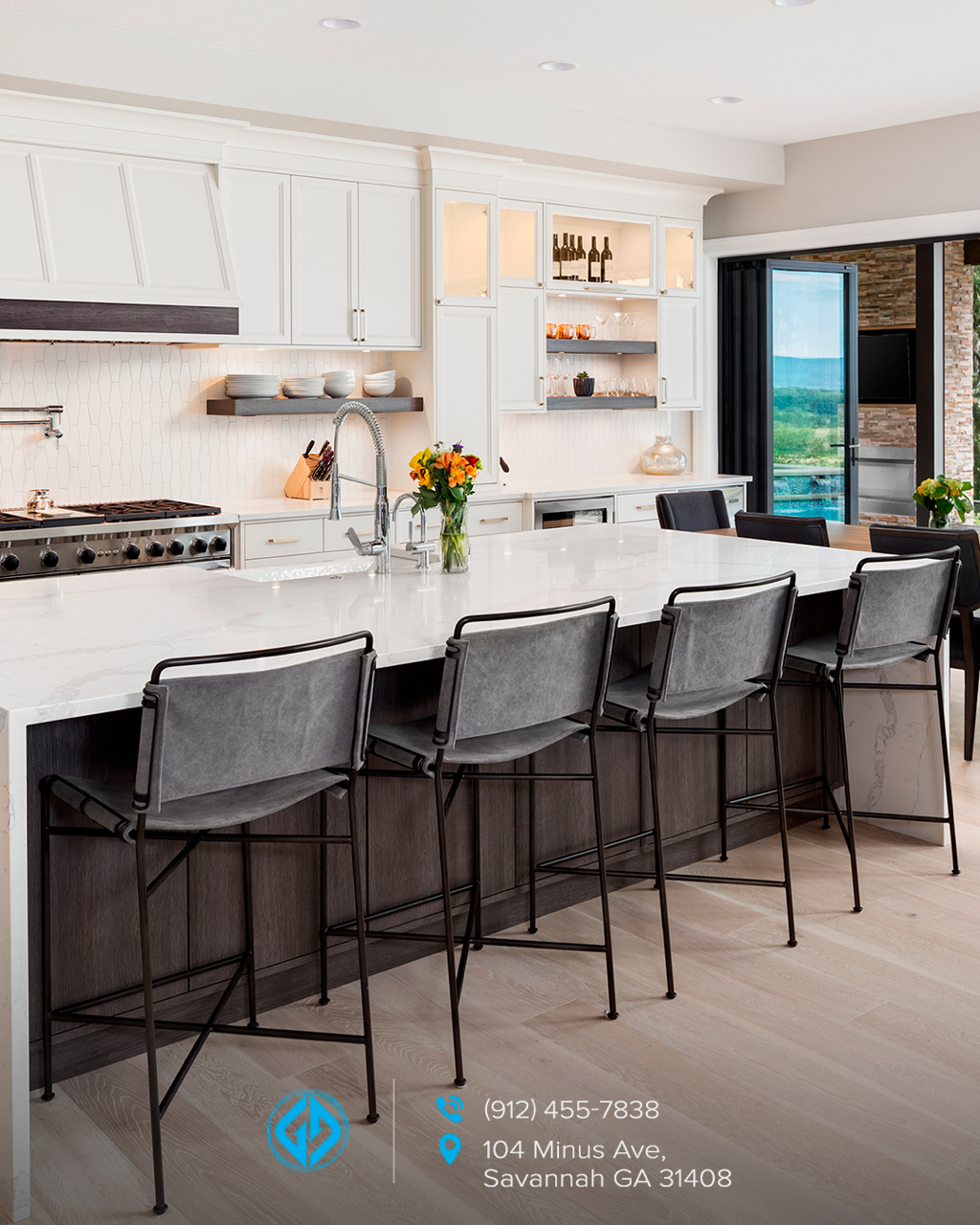
The best marble color for a kitchen depends on your preferred style, the amount of natural light, and how much maintenance you are comfortable with. White marble is the most popular choice because it creates a bright, timeless look, while gray, beige, and darker varieties offer distinctive alternatives.
At Granite Depot of Savannah, we help homeowners compare natural stone colors and understand how each surface may look in a finished space. When exploring marble kitchen countertops Savannah, GA, it is important to look beyond the background color. Veining, movement, finish, and natural variation all influence the final appearance.
Why Is White Marble So Popular in Kitchens?
White marble is a classic kitchen choice because it reflects light and gives the room an open, elegant appearance. Its soft veining adds detail without overwhelming the cabinets or other finishes.
Popular white marble varieties include:
- Carrara: Usually has a soft white to blue-gray background with fine, feathery gray veining. It suits traditional, transitional, and modern kitchens.
- Calacatta: Often features a brighter white background with more pronounced gray or gold veining. Its dramatic pattern can become the focal point of an island.
- Statuario: Typically has a luminous white background and bold gray veining, making it a popular choice for high-impact designs.
- Arabescato: Recognized for expressive, swirling gray patterns against a light background.
White marble works especially well with white, cream, navy, charcoal, and natural wood cabinets. For a coordinated look, choose a cabinet shade that echoes either the background or one of the veins in the slab.
When considering marble kitchen countertops Savannah, GA, bring cabinet and flooring samples when you view slabs. A white stone can look cooler or warmer depending on the lighting and nearby finishes.
Is Gray Marble a Good Choice for a Kitchen?
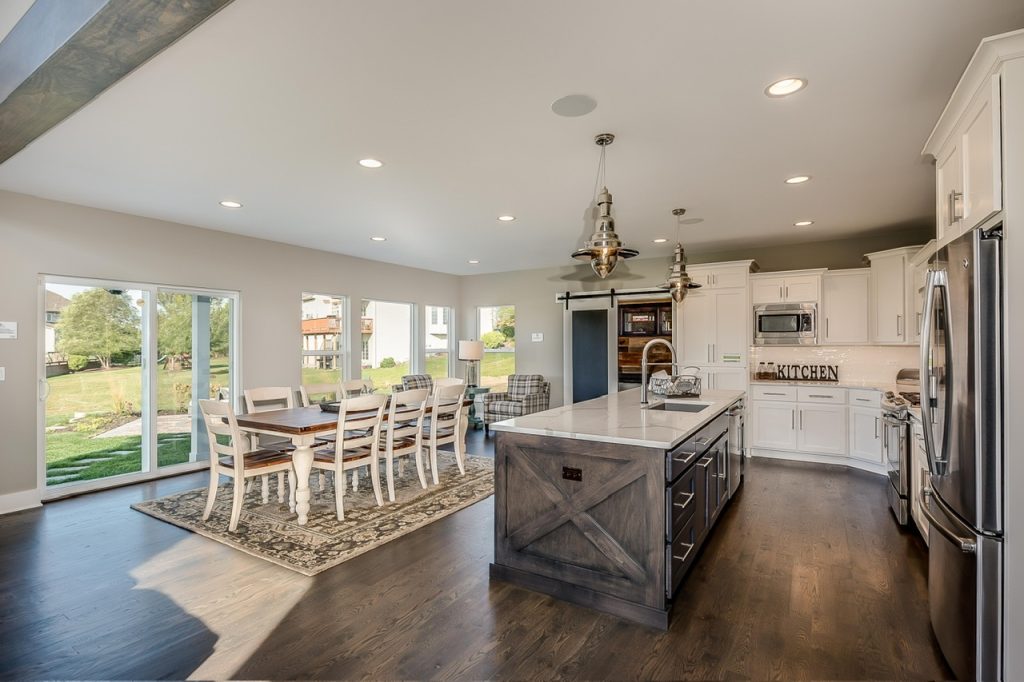
Yes, gray marble is an excellent option if you want a refined, understated kitchen with more depth than an all-white design. Gray backgrounds range from pale silver to deep charcoal, with white, darker gray, or occasionally warm-toned veining.
Light gray marble pairs beautifully with white cabinetry, brushed nickel hardware, and pale wood floors. Darker varieties create a dramatic contrast with cream cabinets or warm brass details.
Consider these combinations:
- Light gray marble with white shaker cabinets for a bright, classic kitchen.
- Medium gray marble with natural oak for a balanced, contemporary feel.
- Dark gray marble with ivory cabinetry for a bold but inviting contrast.
- Gray marble with matte black fixtures for a sleek modern style.
Gray stone can also connect different finishes in an open-plan kitchen. If your flooring has cool undertones or your appliances are stainless steel, gray marble may create a natural visual transition.
Should You Choose Beige or Cream Marble?
Beige and cream marble are ideal when you want a warm, welcoming kitchen rather than a crisp, cool appearance. Soft ivory, tan, and honey undertones work particularly well with wood cabinetry, warm whites, and bronze or brass hardware.
These colors are attractive in traditional, Mediterranean-inspired, and transitional interiors. They also coordinate well with warm-toned flooring and natural textures such as oak, walnut, rattan, and linen.
Before selecting a cream marble, examine the slab for its full range of colors. Some varieties contain subtle gold or brown veining, while others have noticeable gray or pink undertones. Comparing the stone with cabinet samples helps prevent an unexpected color clash.
For marble kitchen countertops Savannah, GA, warm marble can create a relaxed atmosphere that still feels polished. Consider a honed finish if you prefer a softer, less reflective surface.
Can Black or Dark Marble Work in a Kitchen?
Yes, dark marble can make a kitchen feel dramatic, luxurious, and distinctive. Black and deep charcoal varieties often feature white, gold, or lighter gray veins that stand out against the darker background.
Dark marble is particularly effective on a kitchen island, where the stone can become a central design feature. It can also work across the perimeter if the room has sufficient natural or layered artificial lighting.
To keep the space balanced, pair dark marble with lighter elements:
- White, ivory, or light gray cabinets.
- Warm wood flooring or open shelving.
- Brass, bronze, or polished nickel hardware.
- A simple backsplash that does not compete with the stone’s pattern.
Keep in mind that dark polished surfaces may show dust, fingerprints, and water marks more readily than some lighter finishes. A honed finish can soften reflections, although it does not make marble resistant to etching or staining.
Which Marble Color Is Best for Different Kitchen Styles?
The best color is the one that supports the overall design rather than competing with it. Think about the atmosphere you want to create, then compare marble slabs with your cabinets, fixtures, and flooring.
| Kitchen style | Marble colors to consider | Complementary finishes |
|---|---|---|
| Modern | White, light gray, black | Flat-panel cabinets, matte black or chrome |
| Traditional | Carrara, cream, beige | Shaker cabinets, warm metals |
| Coastal | White, pale gray | White or soft blue cabinets, light oak |
| Mediterranean | Cream, beige, warm white | Natural wood, terracotta, bronze |
| Contemporary luxury | Calacatta, Statuario, dark marble | Simple cabinetry, brass accents |
| Transitional | Carrara, gray, ivory | Neutral cabinets, mixed metal finishes |
If your kitchen already has patterned flooring or a detailed backsplash, a marble with quieter veining may be the better choice. In a simpler room, a dramatic slab can add character and become the main visual feature.
What Should You Know About Marble Maintenance?
Marble is a natural stone that requires more care than many engineered countertop materials. It is made primarily of calcite, which reacts with acids and can develop dull spots called etching. Marble can also absorb liquids if it is not properly protected.
Everyday care is manageable when you follow a few simple habits:
- Wipe spills promptly, especially wine, citrus juice, vinegar, tomato sauce, and coffee.
- Use a pH-neutral cleaner formulated for natural stone.
- Avoid abrasive pads and acidic household cleaning products.
- Use cutting boards and trivets to protect the surface.
- Ask your stone professional whether the selected marble should be sealed and how often to reassess it.
Sealer can reduce absorption, but it does not make marble stain-proof or prevent etching. The right maintenance routine depends on the specific stone, finish, use, and sealer product. StoneTech BulletProof is one example of a natural-stone sealer to discuss with a qualified professional; always follow the product label and stone-care guidance.
When planning marble kitchen countertops Savannah, GA, consider how you cook and entertain. If you appreciate the natural patina that develops over time, marble may be a rewarding choice. If you prefer a surface that needs less attention, engineered quartz may be worth comparing.
How Much Do Marble Kitchen Countertops Cost?
Marble countertop pricing varies according to the variety, slab quality, thickness, fabrication details, edge profile, and installation requirements. As a broad U.S. planning estimate, marble material may cost around $40–$150 or more per square foot. Fabrication and installation can bring the total to approximately $70–$200 or more per square foot.
The figures below are general market estimates, not a quote from our showroom. Premium varieties and complex layouts can cost more.
| Cost item | Approximate range |
|---|---|
| Standard marble material | $40–$80 per sq. ft. |
| Premium marble material | $80–$150+ per sq. ft. |
| Fabrication and installation | $30–$60+ per sq. ft. |
| Sink or cooktop cutout | $100–$300+ each |
| Decorative or upgraded edge | $10–$30+ per linear ft. |
For a kitchen with 30–40 square feet of countertop area, a broad installed budget could be approximately $2,100–$8,000 or more. The actual price depends on the slab selected, the number of seams, cutouts, backsplash requirements, and site conditions.
At Granite Depot of Savannah, we help homeowners explore countertop materials and discuss the details that affect fabrication and installation. If you are comparing marble kitchen countertops Savannah, GA, an in-person slab review and accurate measurements are useful steps before setting a final budget.
How Long Does It Take to Fabricate and Install Marble Countertops?
A straightforward marble countertop project may take about one to three weeks after the material and project details are finalized. The schedule depends on slab availability, template appointments, fabrication workload, installation access, and any additional work required.
A typical process may include:
| Project stage | Estimated timeframe |
|---|---|
| Choosing a slab and confirming details | 1–5 days |
| On-site template and measurements | 1–3 days to schedule |
| Fabrication after templating | 5–10 business days |
| Installation | Usually 1 day |
| Additional finishing or adjustments | 1–3 days, if needed |
These are approximate planning windows, not guaranteed completion dates. Special-order stone, complicated edges, multiple seams, or coordination with cabinet installation may extend the schedule.
Before templating, cabinets should be installed, level, and ready to support the countertop. Confirm sink and faucet specifications early so cutouts and clearances can be planned correctly.
How Do You Choose the Right Marble Slab?
The most reliable way to choose marble is to view the actual slab whenever possible. Natural stone varies from block to block, so a small sample may not show the full movement, veining, or color distribution of the material you will receive.
Use this checklist when comparing slabs:
- View the stone in person and examine the full surface.
- Check the background color and direction of the veining.
- Ask your stone professional about natural fissures, filled areas, and other characteristics.
- Compare the slab with cabinet, flooring, and backsplash samples.
- Discuss how the selected finish affects appearance and everyday care.
- Review seam placement, edge details, and cutout locations before fabrication.
At Granite Depot of Savannah, we encourage customers to consider both appearance and practical care when choosing natural stone. A beautiful slab should suit the room and the way you plan to use it.
Frequently Asked Questions
What is the most popular marble color for kitchen countertops?
White marble remains one of the most popular choices because it is versatile and timeless. Carrara, Calacatta, and Statuario are well-known options, each offering a different level of veining and visual contrast.
Is white or gray marble better for a kitchen?
Neither is universally better. White marble creates a brighter, classic look, while gray marble can feel more contemporary and coordinate naturally with stainless steel and cool-toned finishes.
Does marble stain easily?
Marble is porous and can absorb certain liquids, especially when it is unsealed or the sealer needs attention. Prompt cleanup and appropriate stone care help reduce the risk, but sealing does not make marble completely stain-proof.
Is honed or polished marble better for kitchen countertops?
Polished marble has a glossy surface that highlights color and veining. Honed marble has a matte appearance that many homeowners prefer for a softer look. Both finishes can etch and stain, so neither eliminates the need for care.
Can marble be used on a kitchen island?
Yes. Marble can create a beautiful island surface, especially when the slab has distinctive veining. Discuss overhangs, support, edge profiles, and daily maintenance with your countertop professional.
How often should marble countertops be sealed?
There is no single schedule for every marble. The need for resealing depends on the stone’s porosity, finish, sealer, and use. Follow the product guidance and ask a stone-care professional to assess the surface.
Where can I explore marble countertops in Savannah?
Visit Granite Depot of Savannah at 104 Minus Ave, Savannah, GA 31408. Our showroom welcomes walk-ins, and appointments can be arranged through our manager for more personalized assistance.
Visit Our Savannah Showroom
The best marble color for your kitchen is the one that complements your design, fits your lifestyle, and makes you happy every time you walk into the room. Whether you prefer the subtle movement of Carrara, the bold veining of Calacatta, warm cream tones, or dramatic dark stone, viewing full slabs can help you make a confident choice.
At Granite Depot of Savannah, we help homeowners explore granite, quartz, quartzite, and marble options, compare colors, and plan countertop fabrication and professional installation.
Granite Depot of Savannah
Address: 104 Minus Ave, Savannah, GA 31408
Hours: Monday–Friday, 9 AM–5 PM; Saturday, 10 AM–3 PM; Sunday, closed
Website: https://granitedepotsavannah.com/
Explore our stone selection: https://granitedepotsavannah.com/stones/